

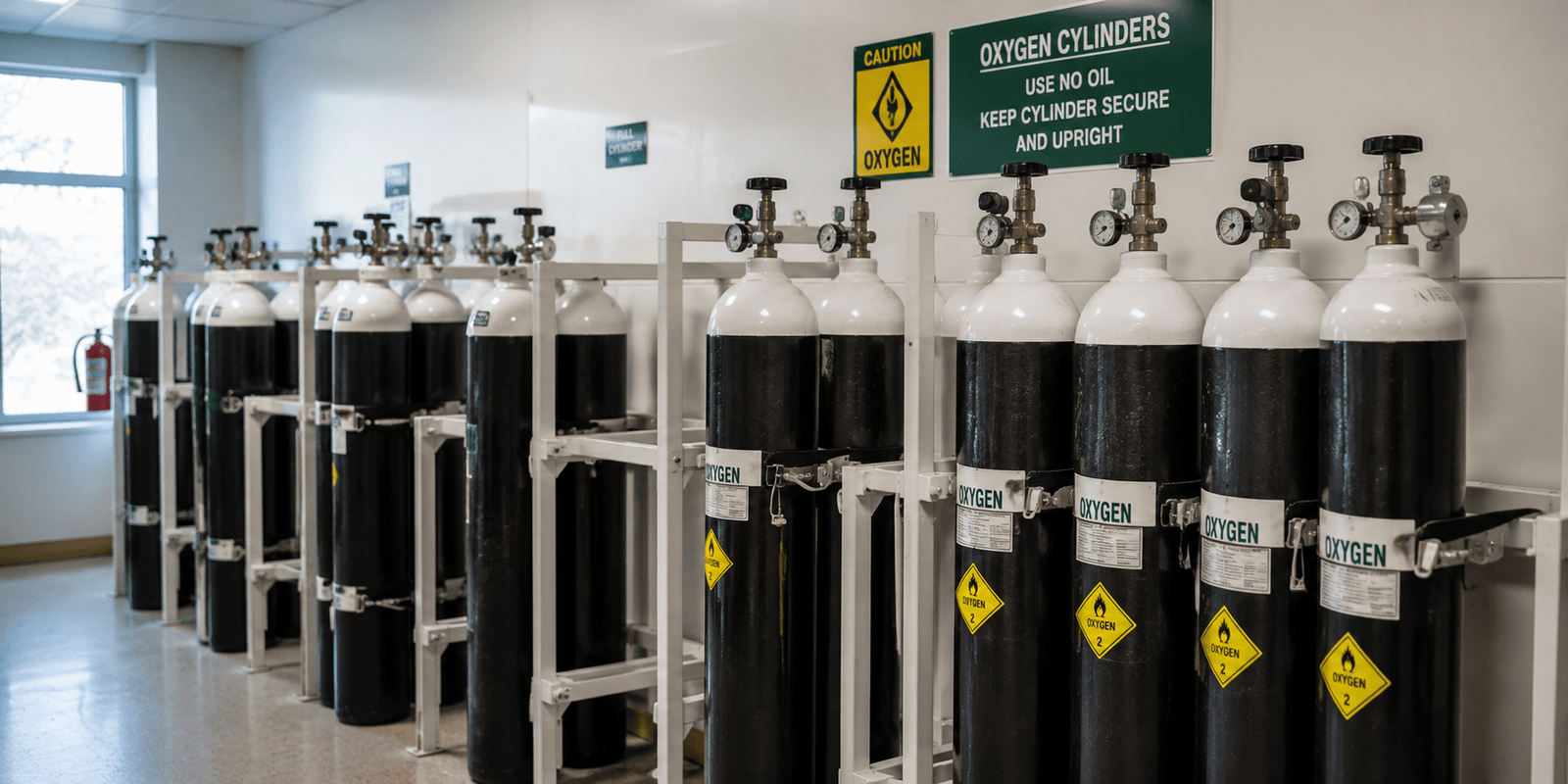
Oxygen cylinder storage plays a critical role in maintaining safety, efficiency, and reliability in hospitals, clinics, industries, and emergency response settings. Since oxygen supports combustion, improper storage can increase the risk of accidents, equipment damage, and operational disruptions.
Whether the cylinder is used for medical treatment or industrial applications, following proper storage guidelines helps protect both people and equipment. Understanding the basics of storage, handling, and maintenance can significantly improve workplace safety and compliance.
Why Proper Oxygen Cylinder Storage Matters
An oxygen cylinder contains highly compressed oxygen gas. Even a small mistake in storage can create serious safety concerns. Proper storage helps prevent leaks, cylinder damage, and contamination of the oxygen supply.
In healthcare facilities, reliable oxygen availability can directly impact patient care. Similarly, industrial operations depend on safe cylinder storage to maintain productivity and regulatory compliance.
When cylinders are stored correctly, their lifespan increases and maintenance requirements decrease. This results in lower operational costs and improved workplace safety.

Basic Storage Requirements for Oxygen Cylinders
Several important requirements should be followed when storing oxygen cylinders.
Store Cylinders Upright
Cylinders should always be stored in an upright position and secured using chains, straps, or dedicated racks. This prevents tipping, which can damage the valve and create hazardous situations.
Keep Storage Areas Ventilated
Good ventilation helps prevent oxygen accumulation in the event of a leak. Storage rooms should have adequate airflow and should not be completely enclosed.
Maintain Safe Temperature Levels
Extreme heat can increase cylinder pressure and compromise safety. Oxygen cylinders should be stored away from direct sunlight, boilers, furnaces, and other heat sources.
Separate Full and Empty Cylinders
Keeping full and empty cylinders in designated sections improves inventory management and reduces confusion during emergencies.
Common Types of Oxygen Cylinders
Different applications require different cylinder sizes and capacities. The following table provides a general overview.
| Cylinder Type | Common Use | Portability | Capacity Level |
|---|---|---|---|
| Portable Cylinder | Home healthcare | High | Low to Medium |
| Medical Cylinder | Hospitals and clinics | Medium | Medium |
| Industrial Cylinder | Manufacturing processes | Low | High |
| Emergency Cylinder | Ambulances and rescue units | High | Medium |
The choice of cylinder depends on oxygen demand, mobility requirements, and operating conditions.
Oxygen Cylinder Storage Safety Guidelines
Safety should always be the top priority when managing oxygen supplies.
Keep Away from Flammable Materials
Oxygen itself is not flammable, but it supports combustion. Therefore, cylinders should never be stored near fuel, oil, grease, paint, or combustible materials.
Use Proper Signage
Storage areas should display clear warning signs indicating the presence of compressed oxygen. This helps workers and visitors remain aware of potential hazards.
Restrict Unauthorized Access
Only trained personnel should handle oxygen cylinders. Limiting access reduces the chances of improper handling or accidental damage.
Protect Cylinder Valves
The valve is one of the most sensitive components of an oxygen cylinder. Protective caps should remain in place whenever cylinders are not connected for use.
Maintenance and Inspection Practices
Regular inspections are essential for safe cylinder operation.
Check for Physical Damage
Inspect cylinders for dents, corrosion, cracks, or valve damage. Any damaged cylinder should be removed from service immediately.
Monitor Expiration and Testing Dates
Most cylinders require periodic testing and certification. Always verify compliance with local regulations and manufacturer recommendations.
Inspect for Leaks
Leak testing should be performed regularly using approved methods. Early detection helps prevent oxygen loss and safety risks.
Proper maintenance not only improves safety but also extends equipment lifespan.

Common Storage Mistakes to Avoid
Many accidents occur because of simple storage errors.
One common mistake is placing cylinders near heat-producing equipment. Another frequent issue is failing to secure cylinders properly, allowing them to fall or roll.
Some facilities also store oxygen cylinders alongside incompatible gases. This practice should be avoided because it increases potential hazards.
Ignoring routine inspections is another serious mistake that can lead to equipment failure or gas leakage.
By recognizing these risks early, organizations can create a safer storage environment.
Choosing the Right Storage Area
Selecting an appropriate storage location is just as important as following handling procedures.
A suitable storage area should be clean, dry, well-ventilated, and protected from weather conditions. Access routes should remain clear so cylinders can be moved safely when needed.
Facilities should also establish emergency procedures and provide training for personnel responsible for cylinder management.
Conclusion
Proper oxygen cylinder storage is essential for maintaining safety, compliance, and operational efficiency. From securing cylinders upright to ensuring adequate ventilation and routine inspections, every step contributes to a safer environment.
Organizations that follow recommended storage practices can reduce risks, improve equipment longevity, and ensure a dependable oxygen supply when it is needed most. Investing in proper oxygen cylinder management is not only a regulatory requirement but also a critical safety responsibility.