

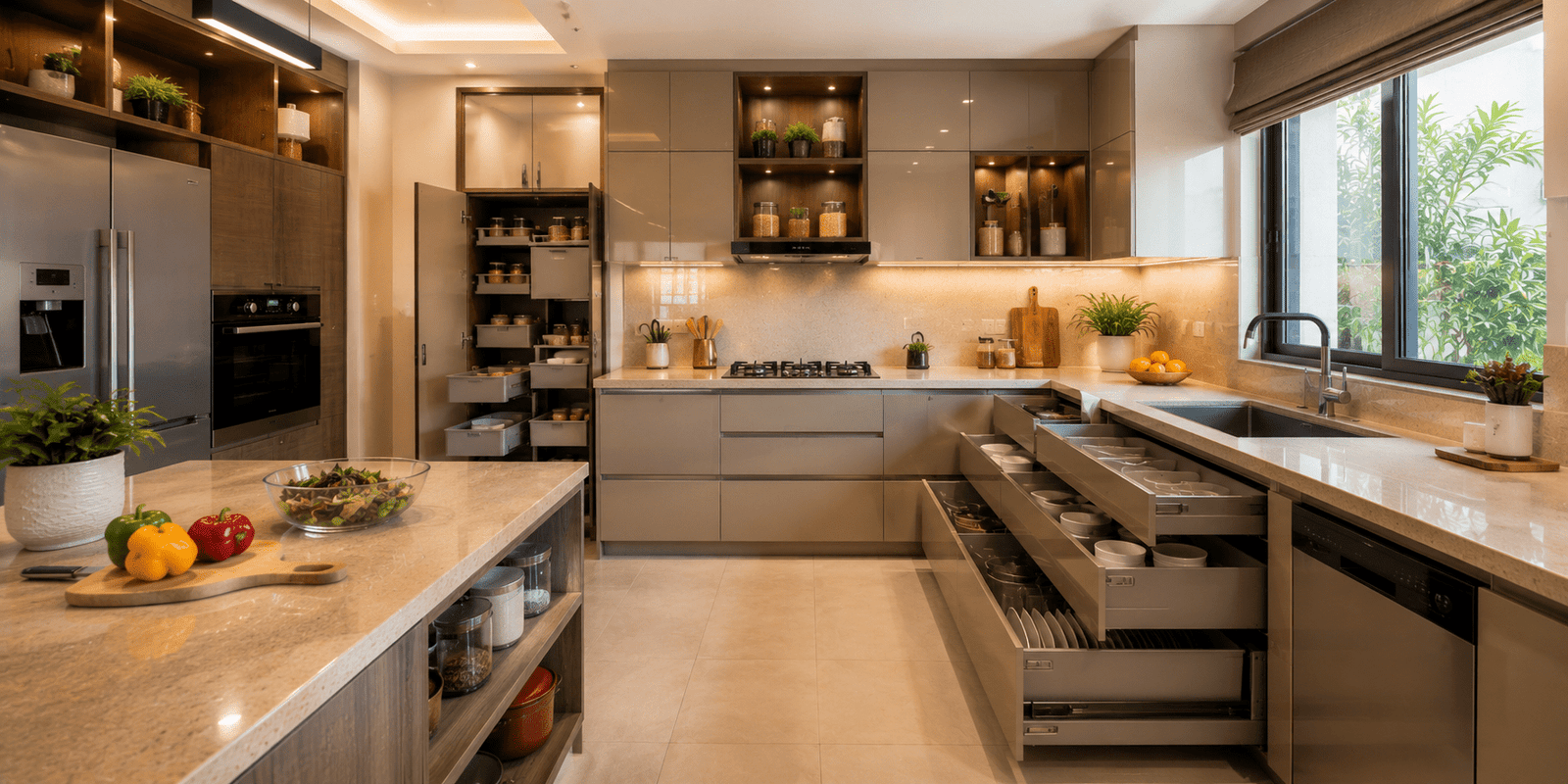
Kitchen design plays a major role in how comfortable, organized, and efficient a home feels. A well-planned kitchen is not only visually appealing but also makes cooking, cleaning, and storage much easier.
Many homeowners focus on colors and finishes while overlooking functionality. However, the best kitchens combine style with practical storage solutions. Whether you have a compact apartment kitchen or a large family kitchen, thoughtful planning can help maximize every inch of available space.
Why Space Planning Matters in Kitchen Design
A successful kitchen starts with proper space planning. Every activity, from food preparation to storage and cleaning, should flow naturally. Poor planning can create unnecessary movement and make daily tasks frustrating.
The concept of a work triangle remains useful today. It focuses on the relationship between the sink, refrigerator, and cooking area. When these elements are positioned efficiently, movement becomes easier and cooking feels more comfortable.
In addition, proper spacing between cabinets, countertops, and appliances helps create a safer and more user-friendly environment.
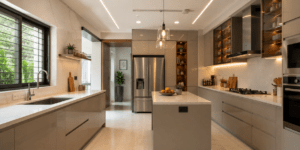
Choosing the Right Kitchen Layout
L-Shaped Kitchen
An L-shaped layout works well for both small and medium-sized homes. It uses two connected walls and provides excellent flexibility for cooking and storage.
U-Shaped Kitchen
This design surrounds the user on three sides, creating ample workspace and storage. It is ideal for families who spend a lot of time in the kitchen.
Galley Kitchen
A galley kitchen places workspaces on opposite sides. This layout is highly efficient and often found in apartments where space is limited.
Island Kitchen
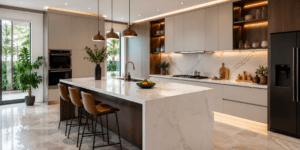
Kitchen islands provide additional workspace, seating, and storage. They are particularly useful in open-concept homes where the kitchen serves as a social gathering area.
| Kitchen Layout | Best For | Storage Potential | Space Requirement |
|---|---|---|---|
| L-Shaped | Small to medium homes | Good | Moderate |
| U-Shaped | Large families | Excellent | High |
| Galley | Compact homes | Good | Low |
| Island | Open-plan homes | Excellent | High |
Smart Storage Solutions for Modern Kitchens
Storage is one of the most important aspects of kitchen design. Even a beautiful kitchen can feel cluttered if storage is insufficient.
Use Vertical Space
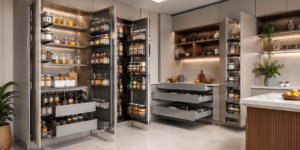
Many kitchens leave valuable wall space unused. Installing tall cabinets that extend to the ceiling creates additional storage without increasing floor space.
Add Pull-Out Drawers
Pull-out drawers improve accessibility and reduce wasted cabinet space. They allow homeowners to reach items easily without digging through deep shelves.
Utilize Corner Cabinets
Corner areas are often underused. Specialized corner storage systems can transform these spaces into highly functional storage zones.
Organize Frequently Used Items
Keeping daily essentials within easy reach helps maintain an organized kitchen while improving workflow efficiency.
Making Small Kitchens Feel Bigger
Limited space does not mean sacrificing style or functionality. Several design techniques can make a small kitchen appear larger and more open.
Light-colored cabinets reflect natural light and create a sense of spaciousness. White, beige, and soft gray tones remain popular choices for compact kitchens.
Glass-front cabinets can also make the room feel less enclosed. Similarly, reflective surfaces such as glossy backsplashes and polished countertops help brighten the space.
Reducing visual clutter is equally important. Hidden storage solutions and integrated appliances contribute to a cleaner, more streamlined appearance.
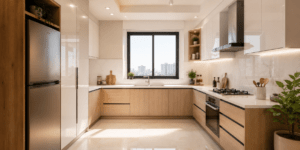
Materials and Finishes That Improve Functionality
Choosing the right materials affects both appearance and long-term performance.
Quartz countertops are popular because they are durable, low-maintenance, and resistant to stains. They also complement a wide range of design styles.
Cabinet finishes should be easy to clean and resistant to daily wear. Matte and laminate finishes often provide a practical balance between durability and aesthetics.
Flooring materials should prioritize safety and maintenance. Slip-resistant tiles remain a reliable choice for busy households.
Good lighting is another essential consideration. Layered lighting, including task lighting under cabinets and ambient ceiling lighting, improves both functionality and visual comfort.
Common Kitchen Design Mistakes to Avoid
Many homeowners make decisions based solely on appearance. While aesthetics are important, functionality should always come first.
One common mistake is insufficient storage planning. Another is overcrowding the kitchen with oversized appliances that restrict movement.
Poor lighting can also reduce usability. A kitchen should have adequate lighting for cooking, cleaning, and dining activities.
Ignoring future needs is another issue. Families often grow, and lifestyle requirements change over time. Designing with flexibility in mind can prevent costly renovations later.
Future-Proofing Your Kitchen Design
Modern kitchens are evolving to support changing lifestyles. Smart storage systems, energy-efficient appliances, and flexible layouts are becoming increasingly popular.
Investing in adaptable cabinetry and multi-purpose storage solutions can help your kitchen remain functional for years to come.
Sustainability is another growing trend. Choosing durable materials and energy-efficient fixtures reduces environmental impact while lowering long-term maintenance costs.
A future-ready kitchen combines practicality, comfort, and timeless design rather than chasing short-lived trends.
Conclusion
A thoughtful kitchen design can significantly improve both space and storage while enhancing the overall functionality of your home. By selecting the right layout, maximizing storage opportunities, choosing durable materials, and avoiding common planning mistakes, you can create a kitchen that is both practical and visually appealing.
Whether you are building a new kitchen or renovating an existing one, focusing on efficient space utilization will help ensure long-term comfort, organization, and value.