

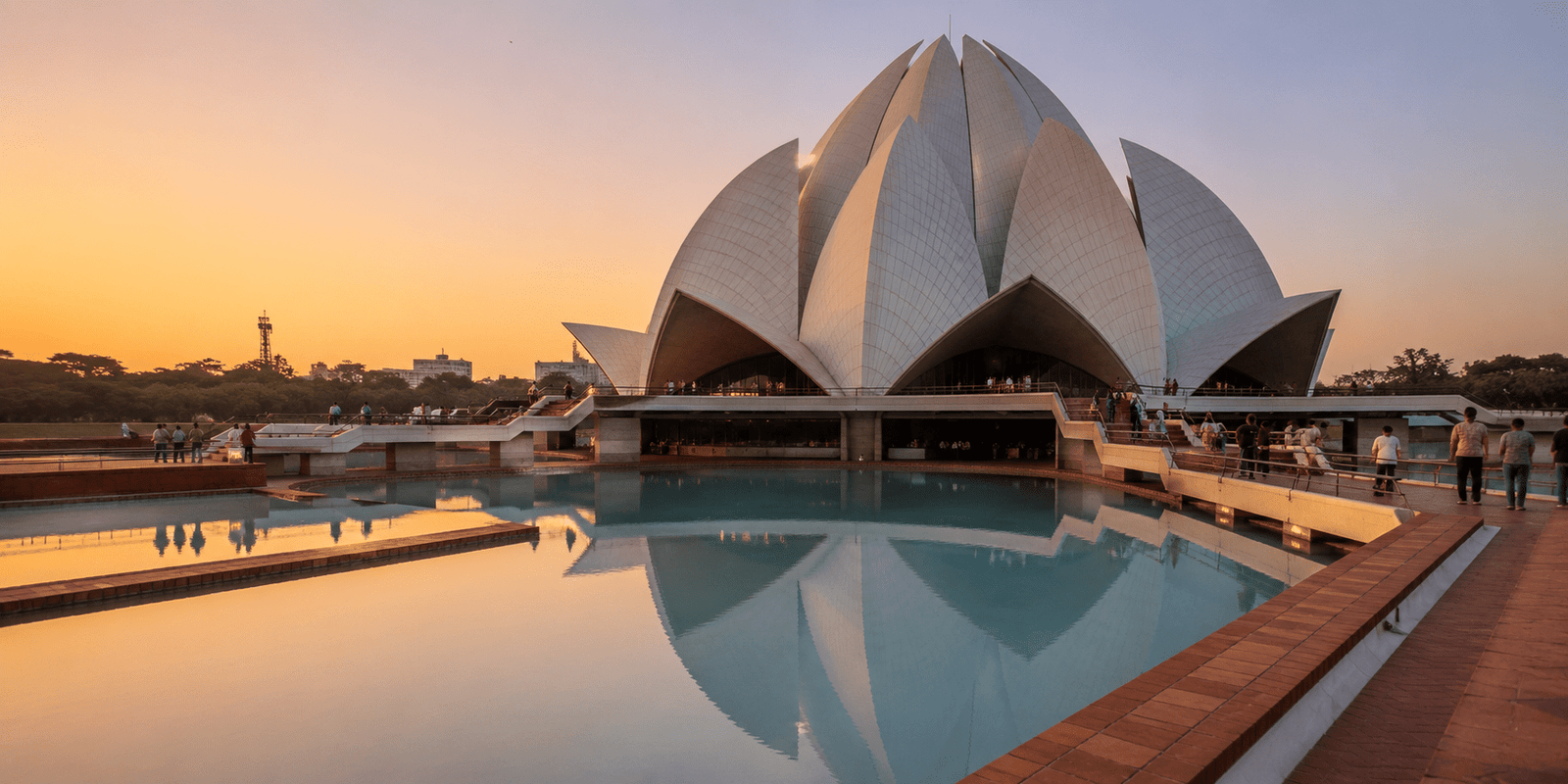
Lotus Temple Delhi is one of the most peaceful and visually stunning places to visit in India’s capital. Known for its lotus-shaped architecture and calm atmosphere, this iconic monument attracts travelers, photographers, spiritual seekers, and architecture lovers from around the world.
Located in South Delhi, the temple is open to people of all religions. Unlike many traditional temples, there are no idols or rituals inside. Instead, visitors experience silence, meditation, and a unique sense of calm in the middle of a busy city.
Why Lotus Temple Delhi Is So Famous
The Lotus Temple is one of the most visited monuments in India. Built in 1986, it serves as a Bahá’í House of Worship and welcomes people from every religion and background.
What makes this place special is its peaceful environment. The moment visitors enter the complex, the noise of Delhi traffic slowly fades away. The silence inside the prayer hall creates a calming experience that many travelers remember long after their trip.
Its flower-inspired design also makes it one of the most photographed landmarks in Delhi. The white marble petals surrounded by blue pools create a striking contrast, especially during sunrise and sunset.
A Universal Place of Worship
Unlike many religious sites, the Lotus Temple promotes unity among religions. There are no priests, no ceremonies, and no loud rituals. People simply sit quietly and reflect.
This inclusive atmosphere makes it popular among both Indian and international tourists.
Architecture and Design Highlights
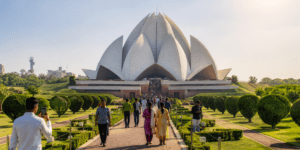
The architecture of Lotus Temple Delhi is one of the main reasons people visit this monument. Designed by Iranian architect Fariborz Sahba, the structure resembles a blooming lotus flower with 27 marble petals arranged in groups.
The temple uses white marble imported from Greece, which gives the building its clean and elegant appearance. From above, the design looks symmetrical and balanced, making it a favorite subject for photographers and architecture students.
Interesting Architectural Facts
| Feature | Details |
|---|---|
| Opening Year | 1986 |
| Architectural Style | Expressionist Architecture |
| Shape | Lotus Flower |
| Material Used | White Marble |
| Number of Petals | 27 |
| Location | South Delhi |
Inside the temple, the massive prayer hall can accommodate thousands of visitors at once. Despite the large crowd, the silence remains impressive.
Why the Lotus Shape Matters
In Indian culture, the lotus symbolizes purity, peace, and spiritual growth. Therefore, the design perfectly matches the temple’s message of unity and harmony.

Best Time to Visit Lotus Temple Delhi
The best months to visit Lotus Temple Delhi are between October and March. During this period, Delhi’s weather remains pleasant and comfortable for sightseeing.
Early mornings and evenings are ideal because the sunlight enhances the beauty of the marble structure. Moreover, the temperature stays cooler, making it easier to explore nearby attractions as well.
Morning vs Evening Visit
Morning visits are perfect for peaceful meditation and fewer crowds. On the other hand, evenings provide excellent lighting for photography and scenic views.
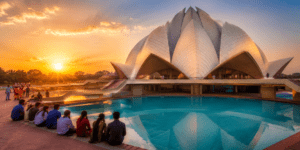
If you enjoy photography, sunset hours offer the best chance to capture the temple with warm natural tones reflecting on the water pools.
Timings, Entry Fee, and Visitor Information
Before visiting Lotus Temple Delhi, it is important to know basic visitor details. Thankfully, entry to the temple is completely free for everyone.
Visitor Essentials
- Opening Days: Tuesday to Sunday
- Closed On: Monday
- Entry Fee: Free
- Nearest Metro Station: Kalkaji Mandir Metro Station
- Recommended Visit Duration: 1–2 hours
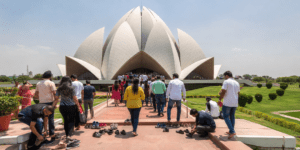
Visitors are expected to maintain silence inside the prayer hall. Shoes must be removed before entering, and photography inside the hall is usually restricted.
How to Reach the Temple
The easiest way to reach the temple is by Delhi Metro. The Kalkaji Mandir Metro Station is located nearby and connects well with major parts of the city.
Taxis and auto-rickshaws are also easily available throughout Delhi.
Nearby Attractions Around Lotus Temple
One of the advantages of visiting Lotus Temple Delhi is its location near several popular attractions.
Kalkaji Mandir
Located close to the temple, Kalkaji Mandir is one of Delhi’s oldest Hindu temples. Many tourists combine both destinations in a single trip.
Nehru Place Market
Technology lovers often explore Nehru Place after their temple visit. It is one of India’s largest electronic markets.
ISKCON Temple Delhi
Another peaceful spiritual destination nearby is the ISKCON Temple, known for its devotional atmosphere and beautiful architecture.
Food and Cafes Nearby
South Delhi offers plenty of cafes and restaurants near the Lotus Temple area. From local street food to modern cafés, visitors can easily enjoy a complete day trip.

Travel Tips for First-Time Visitors
First-time travellers can enjoy a smoother experience by planning ahead.
Helpful Visitor Tips
Arrive Early
Morning hours are quieter and more comfortable, especially during weekends.
Wear Comfortable Clothing
Delhi weather can become warm during summer, so lightweight clothes are recommended.
Respect the Silence
The temple is designed for meditation and peaceful reflection. Therefore, maintaining silence improves the experience for everyone.
Carry Water
Although facilities are available nearby, carrying a water bottle is always helpful during sightseeing.
Avoid Peak Summer Afternoons
Delhi summers can be extremely hot between April and June. Early morning visits are better during these months.
Why the Temple Feels Different From Other Attractions
Many tourist places focus mainly on entertainment or historical value. However, Lotus Temple Delhi offers something deeper — a peaceful mental break from city life.
Visitors often describe the experience as calming and refreshing. Even travellers who are not religious appreciate the silence, architecture, and positive atmosphere.
In today’s fast-moving lifestyle, places like the Lotus Temple remind people to slow down for a while. That emotional connection is one reason why millions continue visiting every year.
Conclusion
Lotus Temple Delhi is much more than an architectural landmark. It combines spirituality, modern design, peaceful surroundings, and cultural significance in one unforgettable destination.
Whether you are a traveler exploring Delhi for the first time or a local looking for a quiet escape, the temple offers a memorable experience. From stunning marble architecture to its welcoming atmosphere, every part of the visit feels calm and meaningful.