

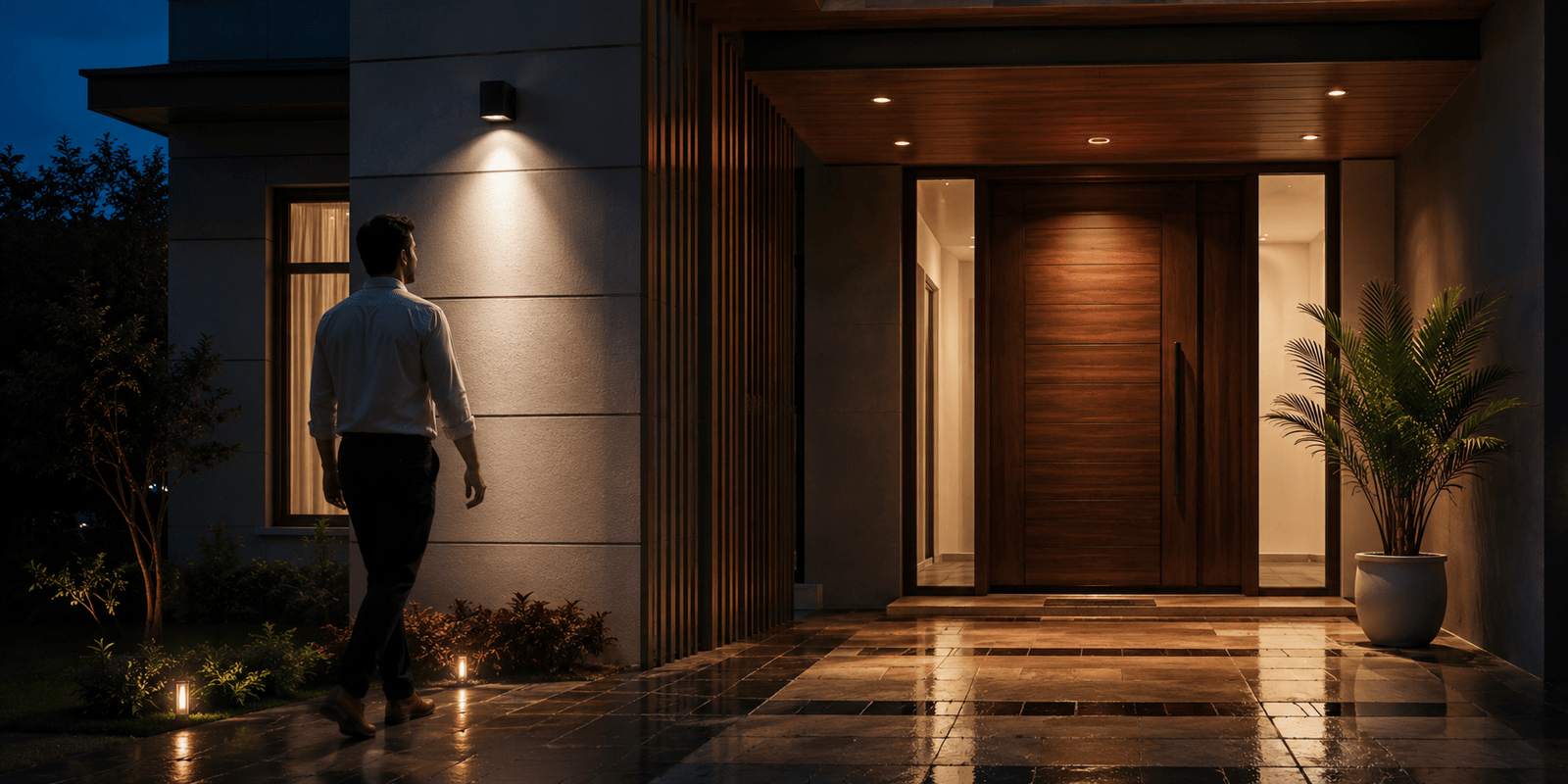
Motion sensor light systems have changed the way modern homes manage lighting and security. Instead of manually switching lights on and off, these smart systems automatically respond to movement and create a more convenient living experience.
Today, homeowners prefer smart lighting because it improves visibility, reduces electricity waste, and adds an extra layer of safety. Whether installed indoors or outdoors, motion-based lighting offers practical benefits that fit perfectly into modern lifestyles.
Why Motion Sensor Light Technology Is Growing
Smart home technology is becoming more common in Indian households. Among all automation upgrades, motion sensor light systems are one of the easiest and most practical improvements.
These lights automatically activate when movement is detected nearby. As a result, homeowners no longer need to search for switches in dark areas. In addition, automated lighting creates a more secure environment around entrances, garages, staircases, and outdoor spaces.
Modern LED sensor lights are also affordable and easy to install. Therefore, they are now widely used in apartments, villas, offices, and retail spaces.

Smart Feature #1 – Automatic Motion Detection
The most important feature of a motion sensor light is automatic movement detection. Advanced sensors identify nearby movement and instantly switch on the light.
This feature becomes extremely useful during nighttime movement inside the house. For example, walking through hallways, staircases, or balconies becomes much safer because the lights activate automatically.
Most modern systems use PIR sensors that detect body heat and movement patterns. These sensors are highly energy efficient and respond quickly without delays.
Automatic activation is also helpful for elderly family members and children who may struggle to locate switches in dark areas.
Smart Feature #2 – Energy Efficient Lighting
One major reason homeowners invest in smart lighting is electricity savings. Traditional lights often remain switched on unnecessarily for long periods.
However, a motion sensor light only works when movement is detected. Once the area becomes inactive, the light automatically turns off after a preset duration.
This smart automation significantly reduces energy consumption. In addition, LED-based sensor lights consume far less electricity compared to traditional bulbs.
The combination of LED technology and automated sensors creates an energy-efficient lighting solution suitable for both small apartments and large homes.
| Feature | Benefit | Best Usage Area |
|---|---|---|
| Automatic Detection | Hands-free operation | Hallways |
| Energy Saving Mode | Lower electricity bills | Outdoor spaces |
| Security Activation | Improved visibility | Entrances |
| Smart Connectivity | Mobile control | Smart homes |
Smart Feature #3 – Enhanced Home Security
Security is another major advantage of motion sensor lighting systems. Sudden illumination around entrances or outdoor areas can discourage unwanted activity and improve visibility at night.
Many homeowners install sensor lights near gates, parking areas, terraces, and gardens. Whenever movement occurs, the area instantly becomes illuminated.
Moreover, brighter outdoor spaces make it easier for security cameras to capture clear footage during nighttime. This creates an additional security advantage for homeowners using CCTV systems.
Motion-based security lighting also helps family members feel safer while returning home late at night. Therefore, these systems are commonly used in residential societies and independent houses.
Smart Feature #4 – Smart Home Connectivity
Modern motion sensor light systems now support smart home integration. Many advanced models can connect with mobile apps, Wi-Fi networks, and voice assistants.
This allows users to customize brightness levels, timer duration, and sensor sensitivity directly from their smartphones. Some systems even send notifications whenever motion is detected.
Voice-controlled lighting is becoming especially popular in premium smart homes. Homeowners can manage lighting through smart assistants without touching switches.
In addition, connected lighting systems can be synchronized with other smart devices such as security cameras and alarm systems. This creates a fully automated smart home experience.
Best Places to Install Motion Sensor Lights
Correct placement is important for maximum efficiency and coverage. Some locations naturally benefit more from automated lighting systems.
Main Entrance
Entrance areas require immediate visibility during nighttime movement. Motion sensor lights improve convenience and security at the front door.
Staircases and Hallways
Indoor pathways become safer because lights activate automatically when someone walks nearby.
Garage and Parking Areas
Parking spaces benefit from instant illumination while entering or exiting vehicles at night.
Garden and Backyard
Outdoor spaces remain visible and secure without keeping lights switched on continuously.

How to Choose the Right Sensor Light
Before purchasing a motion sensor light, homeowners should evaluate installation requirements carefully.
First, consider the detection range. Larger spaces need wider coverage. Secondly, brightness level matters because dim lights may not provide effective visibility outdoors.
Weather resistance is another important factor. Outdoor lights should be waterproof and dust resistant for long-term durability.
Smart connectivity features may also be useful for users planning a complete smart home setup. However, simpler PIR sensor models remain ideal for standard residential usage because they are affordable and reliable.
Battery-powered lights are easier to install, while wired systems provide consistent long-term performance.
Conclusion
Motion sensor light technology has become an essential part of modern homes. These systems combine convenience, security, energy savings, and automation into one practical solution.
From automatic detection to smart connectivity, modern sensor lights improve daily living while reducing unnecessary electricity usage. Whether installed indoors or outdoors, they offer long-term value for homeowners looking to create a smarter and safer environment.