


Agra Fort is one of India’s most iconic historical monuments and a must-visit destination for anyone exploring Agra. Often overshadowed by the nearby Taj Mahal, this magnificent fort offers an equally fascinating journey through the glory of the Mughal Empire. With its impressive red sandstone walls, elegant marble palaces, royal courtyards, and centuries-old stories, Agra Fort is much more than just a military fortress.
Recognized as a UNESCO World Heritage Site, the fort attracts millions of visitors every year. Whether you’re passionate about history, architecture, photography, or cultural travel, Agra Fort has something special to offer. This travel guide covers everything you need to know before your visit, including its history, major attractions, visitor information, and practical travel tips.
History of Agra Fort
The history of Agra Fort dates back to the 16th century when Mughal Emperor Akbar decided to build a powerful fortress in Agra. Although an older fort already existed on the site, Akbar transformed it into a magnificent red sandstone fortress around 1565. Thousands of skilled craftsmen worked for several years to complete this architectural masterpiece.
Over time, later Mughal emperors, including Jahangir and Shah Jahan, expanded the fort by adding beautiful marble palaces, audience halls, gardens, and elegant courtyards. These additions blended strength with luxury, making Agra Fort both a royal residence and an important administrative center.
One of the fort’s most emotional historical stories involves Emperor Shah Jahan. After being imprisoned by his son Aurangzeb, he spent the last years of his life inside the fort. From one of its marble balconies, he is believed to have looked across the Yamuna River toward the Taj Mahal, the monument built in memory of his beloved wife Mumtaz Mahal.
Today, Agra Fort stands as one of the finest examples of Mughal architecture and continues to preserve centuries of Indian history.
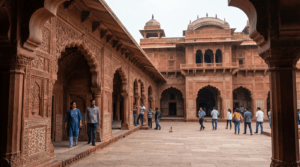
Why Agra Fort Is Famous
Agra Fort is famous for its remarkable combination of military engineering, royal architecture, and historical importance. Unlike many forts built solely for defense, it also served as the luxurious residence of several Mughal emperors.
Visitors are impressed by the fort’s enormous defensive walls, intricate carvings, elegant marble buildings, and panoramic views of the Taj Mahal. Every section of the fort tells a different story about the political power, artistic achievements, and daily life of the Mughal Empire.
Its designation as a UNESCO World Heritage Site further highlights its global cultural significance. For travelers interested in India’s rich heritage, Agra Fort offers an unforgettable experience that combines history, architecture, and breathtaking scenery.

Top Attractions Inside Agra Fort
Agra Fort is home to several remarkable structures that reflect the grandeur of Mughal architecture. Every building has its own history and unique design, making the fort an exciting place to explore.
Jahangiri Mahal
Jahangiri Mahal is one of the oldest and best-preserved buildings inside the fort. Built by Emperor Akbar, it combines Hindu and Islamic architectural styles. The detailed carvings, spacious courtyards, and decorative balconies make it one of the most photographed spots in the complex.
Diwan-i-Am
The Diwan-i-Am, or Hall of Public Audience, was where Mughal emperors listened to the concerns of ordinary citizens and held official meetings. Its elegant arches and open design highlight the administrative importance of the fort.
Diwan-i-Khas
This beautiful hall was reserved for private meetings with royal guests, foreign ambassadors, and important officials. The marble pillars and intricate decorations showcase the artistic excellence of the Mughal period.
Musamman Burj
Musamman Burj is perhaps the most emotional location inside Agra Fort. This elegant marble tower offers a stunning view of the Taj Mahal across the Yamuna River. According to history, Emperor Shah Jahan spent his final years here after being imprisoned by Aurangzeb.

Visitor Information
Before planning your visit, it is helpful to know some essential details.
| Information | Details |
|---|---|
| Location | Agra, Uttar Pradesh |
| UNESCO Status | World Heritage Site |
| Main Entry | Amar Singh Gate |
| Recommended Visit Duration | 2–3 Hours |
| Best Time to Explore | Morning or Late Afternoon |
| Ideal Season | October to March |
Note: Entry fees and opening hours may change over time. Always check the latest official information before your visit.
Best Time to Visit
The ideal time to visit Agra Fort is between October and March, when the weather is pleasant for sightseeing. During these months, visitors can comfortably explore the large complex and enjoy outdoor photography.
For the best experience, arrive early in the morning or later in the afternoon. The softer sunlight enhances the beauty of the red sandstone walls while making the visit more comfortable. Weekdays are generally less crowded than weekends and public holidays.

Helpful Travel Tips
Planning ahead can make your visit smoother and more enjoyable. Wear comfortable walking shoes because the fort covers a large area with stone pathways and stairs. Carry a reusable water bottle, sunscreen, sunglasses, and a hat if you are visiting during warmer months.
Hiring a knowledgeable guide or using an official audio guide can help you understand the fascinating history behind each palace and courtyard. Photography enthusiasts should carry a fully charged camera or smartphone, as there are numerous beautiful viewpoints throughout the monument.
If you are visiting Agra for a full day, consider combining your trip with nearby attractions such as the Taj Mahal, Mehtab Bagh, and Itmad-ud-Daulah’s Tomb to experience the city’s rich Mughal heritage.
Conclusion
Agra Fort is much more than a historic fortress—it is a living symbol of India’s royal past, architectural brilliance, and cultural heritage. From majestic palaces and audience halls to breathtaking views of the Taj Mahal, every corner of the fort tells a remarkable story.
Whether you are visiting for history, photography, or family travel, Agra Fort deserves a place on every travel itinerary. Plan your visit thoughtfully, explore at a relaxed pace, and take time to appreciate one of the finest monuments of the Mughal era.