

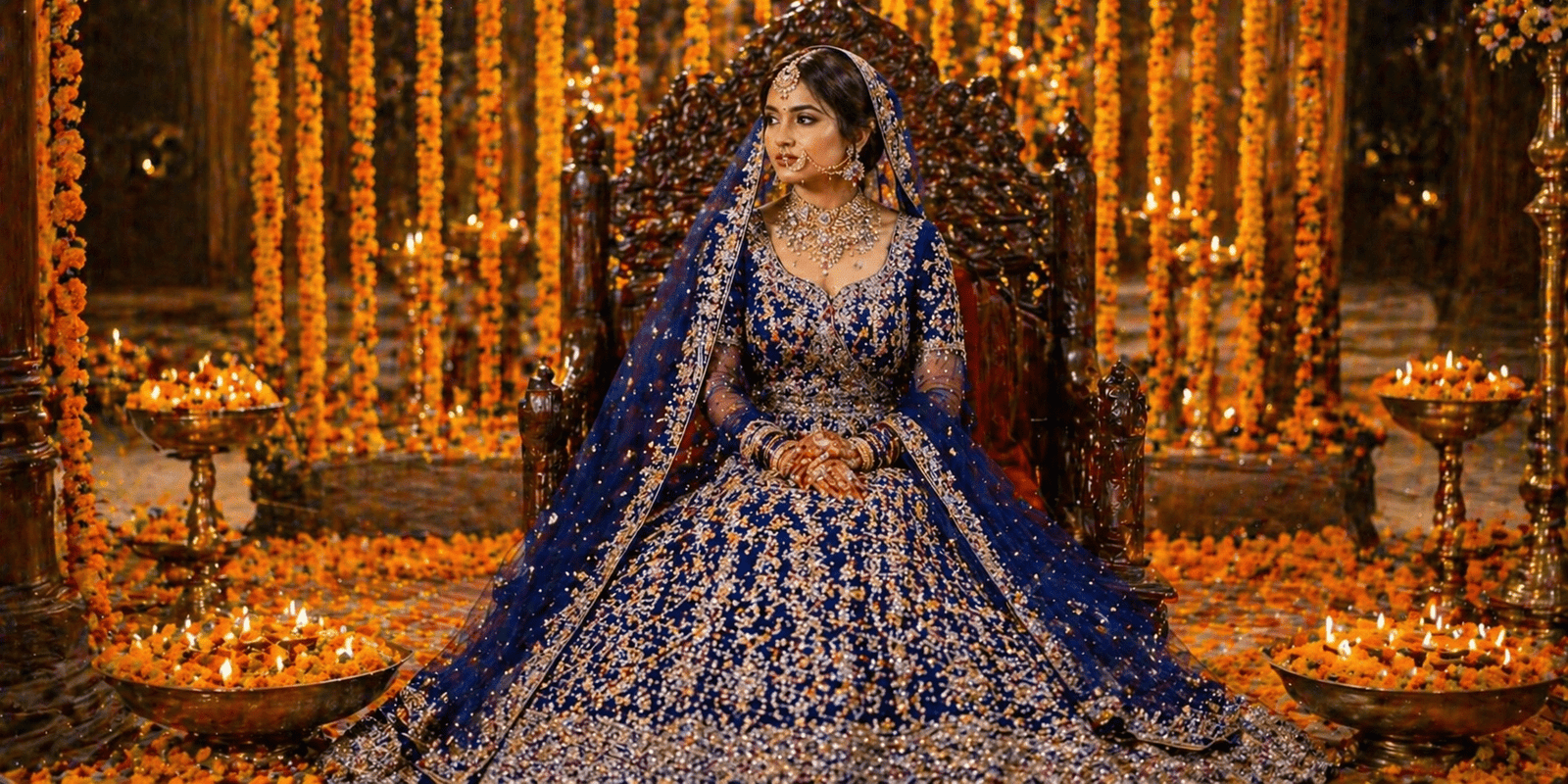
Choosing the right bridal lehenga is perhaps the most exciting — and overwhelming — decision a bride faces before her wedding day. With hundreds of fabrics, embroideries, silhouettes, and colour palettes available today, finding the one that feels truly yours takes a little guidance. Whether you are drawn to timeless reds or want to embrace a softer pastel palette, understanding the key styles available will help you walk into that bridal store feeling confident and prepared.
- Why the Bridal Lehenga Still Reigns Supreme
- Understanding Fabric Choices for Your Wedding Lehenga
- Silk and Velvet
- Net and Georgette
- Classic Bridal Lehenga Styles at a Glance (Table)
- Colour Trends in Bridal Lehenga Designs
- Embroidery and Embellishment Styles Explained
- Zardozi and Gota Patti Work
- Resham and Mukaish Embroidery
- Silhouette Guide: Which Cut Suits Your Body
- Contemporary Bridal Lehenga Trends for 2026
- How to Finalise Your Bridal Lehenga
Why the Bridal Lehenga Still Reigns Supreme
The Indian wedding lehenga has remained the top choice for brides across regions for generations, and for good reason. It carries a sense of grandeur that few other outfits can match. From the sweep of the skirt to the richness of the blouse, every element tells a story.
Moreover, it is one of the most versatile garments in Indian fashion. A bride in Delhi might choose a heavily embellished velvet lehenga in deep maroon, while a bride in Mumbai might opt for a lightweight organza piece in ivory. The same silhouette, interpreted a thousand different ways — that is the magic of this outfit.
In recent years, brides have also begun to look at the lehenga as a long-term investment. With the right care, a well-crafted bridal lehenga can be passed down through families, making it more than just wedding attire — it becomes an heirloom.
Understanding Fabric Choices for Your Wedding Lehenga
The fabric you choose will determine not just how your bridal lehenga looks in photographs, but how it feels throughout a long wedding day. The wrong fabric can leave you uncomfortable, while the right one can feel like a second skin.
Silk and Velvet
Silk and velvet lehengas are the most traditional choices, beloved for their richness and the way they hold embroidery. Banarasi silk, in particular, is woven with gold or silver brocade motifs and is considered one of the most prestigious choices for a North Indian bride. Velvet, on the other hand, works especially well for winter weddings because of its warmth and the lush depth it gives to colours like burgundy, forest green, and midnight blue.
Net and Georgette
For brides who want a lighter, floatier look, net and georgette are excellent choices. These fabrics are particularly popular for destination weddings and summer ceremonies where a heavy lehenga would be impractical. However, do not let their delicate appearance fool you — when layered well, a net lehenga can look just as grand as any silk piece.
Classic Bridal Lehenga Styles at a Glance
To help you navigate the wide world of bridal lehenga designs, here is a quick comparison of the most popular styles, their defining features, and the kind of bride they suit best.
| Style | Best Fabric | Embellishment | Ideal For | Season |
|---|---|---|---|---|
| Traditional Rajputana | Silk / Velvet | Gota Patti, Zardozi | Grand palace or fort weddings | Winter |
| Mughal-Inspired | Brocade / Organza | Heavy embroidery, mirror work | Heritage venues, banquets | All seasons |
| Contemporary Minimalist | Georgette / Crepe | Cutwork, tone-on-tone | Modern, intimate ceremonies | Summer / Spring |
| Floral Pastel | Net / Tulle | 3D floral applique | Garden or destination weddings | Spring / Summer |
| Royal Dark Jewel Tones | Velvet / Heavy Silk | Resham, Mukaish | Evening receptions, grand halls | Winter |
| Fusion / Indo-Western | Organza / Satin | Sequins, metallic thread | Urban, cosmopolitan brides | All seasons |
| Antique Beige and Ivory | Raw Silk / Tissue | Antique zari, pearl work | Daytime ceremonies, mehendi | All seasons |
Colour Trends in Bridal Lehenga Designs
While red will always hold a place of honour in Indian bridal fashion — symbolising prosperity, love, and tradition — the modern bride is far more adventurous with colour. In recent years, dusty rose, powder blue, sage green, and ivory have all made their way from the runway into actual bridal trousseaus.
Ombre and dual-tone lehengas have also seen a surge in popularity. A lehenga that transitions from deep maroon at the hem to a blush pink at the waist, for example, offers a uniquely modern aesthetic while still feeling rooted in traditional craft. Therefore, if you feel restricted by conventional colours, know that contemporary bridal lehenga designs embrace a full spectrum.
Embroidery and Embellishment Styles Explained
The craftsmanship on a bridal lehenga is what truly separates a wedding outfit from everything else in a woman’s wardrobe. India is home to dozens of distinct embroidery traditions, each associated with a particular region and a particular character.
Zardozi and Gota Patti Work
Zardozi is a form of heavy metal embroidery that uses gold and silver threads alongside beads and stones. Originating from the Mughal courts, it gives a lehenga an unmistakably royal appearance. Gota Patti, on the other hand, uses thin strips of gold ribbon folded into shapes, and is a signature of Rajasthani bridal fashion.
Both styles carry significant weight — literally and figuratively. A full Zardozi lehenga can be quite heavy, so it is worth trying it on for an extended period during your fitting to ensure you can comfortably wear it through a multi-hour ceremony.
Resham and Mukaish Embroidery
Resham (silk thread) embroidery is lighter than Zardozi and allows for incredibly detailed, colourful patterns. It is a popular choice for brides who want an elaborate look without the weight. Mukaish work, which involves the insertion of very fine metal wire into fabric, creates a subtle, full-body shimmer that is especially striking under wedding lights.
Silhouette Guide: Which Cut Suits Your Body
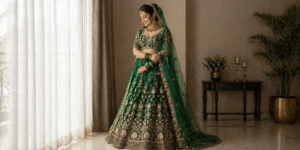
Beyond colour and fabric, the silhouette of your bridal lehenga will significantly affect how you look and feel on the day. The lehenga skirt comes in several distinct cuts, each with a different effect.
A-Line / Flared Lehenga
The classic A-line silhouette flares out gradually from the waist and flatters most body types. It offers freedom of movement and is the safest choice for brides who are unsure about which cut to try. In addition, it photographs beautifully from every angle.
Mermaid / Fishtail Lehenga
Hugging the body from the waist down to the knee before flaring out, the mermaid silhouette is dramatic and modern. It works best for brides who are comfortable in form-fitting clothing and want to make a bold statement.
Circular and Double Circular Lehenga
The circular lehenga uses panels of fabric cut in a circle, which creates a very full, even flare when the bride moves or spins. Double circular lehengas have even more volume and are a favourite for brides who love an extravagant, princess-like silhouette.
Contemporary Bridal Lehenga Trends for 2026
Modern brides are pushing creative boundaries in fascinating ways. One of the biggest trends this year has been the incorporation of hand-painted motifs on lehengas, where artisans paint floral or abstract designs directly onto the fabric for a truly one-of-a-kind piece.
Another rising trend is sustainability. More brides are opting for handloom fabrics, natural dyes, and ethically sourced embellishments, supporting local artisans while also making a personal statement. Additionally, pre-stitched lehenga skirts with adjustable waistbands have become popular for brides who want a practical yet stunning option.

How to Finalise Your Bridal Lehenga
The process of choosing a bridal lehenga should never be rushed. Ideally, begin your search at least six to eight months before the wedding. This gives you enough time for multiple fittings, any customisation work, and, if necessary, alterations.
Start by shortlisting three to five styles based on your personal taste and the nature of your wedding venue. A rooftop reception calls for something very different from a traditional temple ceremony. Moreover, consider the weight of the outfit against the duration of your wedding events — you will be wearing this for several hours.
Finally, trust your instincts. No amount of trend reports or style guides should override how you feel when you look in the mirror. The best bridal lehenga is always the one that makes you feel most like yourself, only grander.
The Final Word on Your Bridal Lehenga
A beautifully chosen bridal lehenga is more than an outfit — it is a memory you will carry for the rest of your life. From the richness of Zardozi silk to the airy grace of a net floral piece, there is a perfect wedding lehenga for every kind of bride and every kind of ceremony. Use the guide above as your starting point, take your time, involve the people you trust, and you will find something truly unforgettable.