

Introduction
An office chair is more than just a piece of furniture—it directly impacts your comfort, posture, and daily productivity. Whether you work from home or in a corporate office, choosing the right chair can prevent back pain and improve focus.
However, many people overlook small details like seat height, lumbar support, and material quality. Over time, this leads to discomfort and reduced efficiency.
In this guide, you’ll learn practical and expert-backed tips to select and use an office chair the right way.
Table of Contents
1. Why an Office Chair Matters for Health
2. Key Features of a Good Office Chair
- 2.1 Lumbar Support
- 2.2 Seat Height & Depth
- 2.3 Armrests & Mobility
3. Types of Office Chairs Explained
4. How to Choose the Right Office Chair
5. Office Chair Setup for Perfect Posture
6. Common Mistakes to Avoid
7. Maintenance Tips for Long-Term Use
8. Final Thoughts
Why an Office Chair Matters for Health
A poorly designed office chair can lead to serious issues like lower back pain, neck stiffness, and poor posture. Sitting for long hours without support puts pressure on your spine.
On the other hand, a well-designed ergonomic chair supports your natural posture. This reduces strain and helps maintain energy levels throughout the day.
Moreover, investing in a quality chair is not just about comfort—it’s about long-term health and productivity.
Key Features of a Good Office Chair
Lumbar Support
The most important feature of any office chair is lumbar support. It supports the lower back and prevents slouching.
A good chair should have adjustable lumbar support to match your spine curve. Without it, your posture naturally collapses over time.
Seat Height & Depth
Your feet should rest flat on the ground. If the chair is too high or too low, it can affect blood circulation.
Additionally, seat depth should allow 2–3 inches of space between the seat edge and your knees. This ensures proper comfort and support.
Armrests & Mobility
Armrests help reduce pressure on your shoulders and neck. Adjustable armrests are always a better option.
Also, wheels and swivel features allow easy movement, which is essential for multitasking during work.

Types of Office Chairs Explained
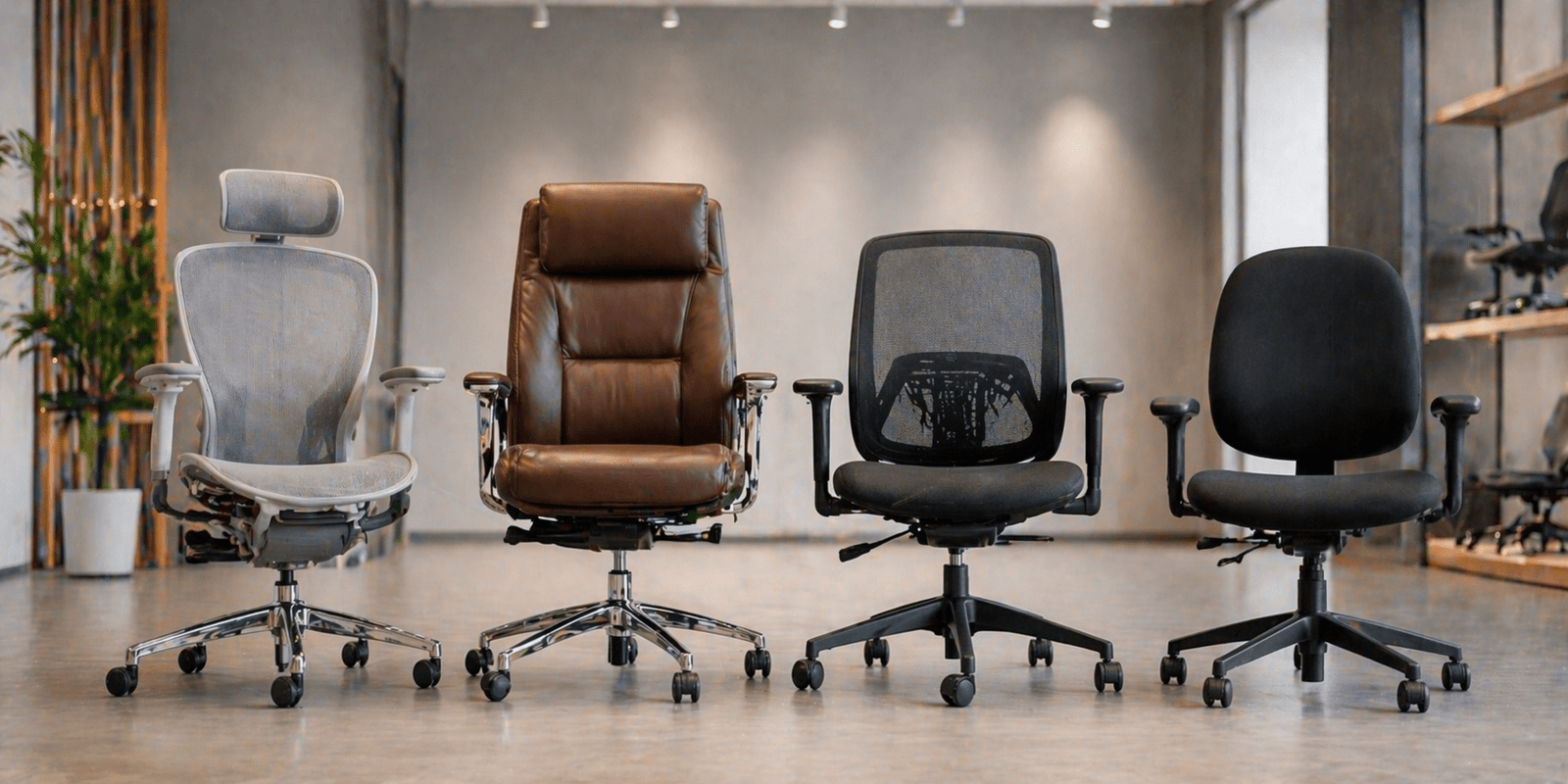
There are different types of office chair options available, each designed for specific needs.
| Chair Type | Best For | Key Benefit |
|---|---|---|
| Ergonomic Chair | Long working hours | Full body support |
| Executive Chair | Premium office setup | Comfort & style |
| Mesh Chair | Hot climates | Breathability |
| Task Chair | Short-term use | Budget-friendly |
| Gaming Chair | Extended sitting | Neck & back support |
Choosing the right type depends on your usage and budget. For example, if you work 8–10 hours daily, an ergonomic chair is the best choice.
How to Choose the Right Office Chair
Selecting the perfect office chair requires a balance between comfort, design, and functionality.
First, consider how many hours you sit daily. For longer durations, invest in a chair with advanced ergonomic features.
Second, check adjustability. A good chair should allow you to customize height, tilt, and armrest position.
Third, pay attention to material. Mesh chairs are breathable, while cushioned chairs offer a plush feel.
Finally, always test the chair if possible. Comfort is subjective, and what works for one person may not suit another.

Office Chair Setup for Perfect Posture
Even the best office chair won’t help if it’s not adjusted correctly.
Start by setting the height so your knees are at a 90-degree angle. Keep your feet flat on the floor.
Next, adjust the backrest to support your spine’s natural curve. Avoid leaning too far back or forward.
Your screen should be at eye level to prevent neck strain. Also, keep your arms relaxed on the armrests.
Small adjustments can make a big difference in your daily comfort.

Common Mistakes to Avoid
Many people unknowingly misuse their office chair, leading to discomfort.
One common mistake is sitting for long hours without breaks. Even with a good chair, movement is essential.
Another mistake is ignoring adjustments. Most users never customize their chair settings, which reduces its effectiveness.
Additionally, choosing style over comfort can backfire. A visually appealing chair may not always provide proper support.
Avoiding these mistakes ensures better health and productivity.
Maintenance Tips for Long-Term Use
A high-quality office chair can last for years if maintained properly.
Clean the chair regularly to prevent dust buildup, especially if it has mesh material.
Check screws and wheels occasionally to ensure stability. Loose parts can affect performance and safety.
Also, avoid excessive weight or misuse. Treat your chair as an investment rather than just furniture.
Regular care keeps your chair comfortable and durable over time.

Final Thoughts
An office chair plays a crucial role in your daily work life. From posture to productivity, the right choice can transform your experience.
By understanding key features, choosing the right type, and setting it up properly, you can avoid discomfort and improve efficiency.
Ultimately, investing in a good office chair is an investment in your health, focus, and long-term well-being.