


Sensitive skin can feel difficult to manage, especially when everyday products suddenly cause redness, dryness, or irritation. However, with the right skincare habits and product choices, it becomes much easier to maintain calm, healthy, and glowing skin.
Many people unknowingly damage their skin barrier by over-cleansing, using harsh ingredients, or trying too many trending beauty products at once. Therefore, understanding your skin’s needs is the first step toward long-term skin health.
Understand What Causes Sensitive Skin
Sensitive skin is not always a medical condition. In many cases, it develops because the skin barrier becomes weak or damaged. As a result, the skin reacts quickly to environmental changes, strong skincare products, pollution, or even stress.
Common signs include:
- Redness
- Burning sensation
- Dry patches
- Itching
- Tightness after washing
- Breakouts from new products
People living in hot or polluted cities often experience increased irritation. In addition, excessive exfoliation and alcohol-based skincare products can make symptoms worse.
Common Triggers of Sensitive Skin
Some skincare ingredients and environmental factors can trigger reactions more easily than others. Understanding these triggers helps prevent future irritation.
| Trigger | Possible Effect on Skin |
|---|---|
| Fragrance-heavy products | Redness and itching |
| Harsh scrubs | Barrier damage |
| Hot water | Dryness and tightness |
| Pollution | Inflammation |
| Overwashing | Loss of natural oils |

Build a Gentle Daily Routine
A simple skincare routine usually works better for sensitive skin than a complicated one. Instead of using many active ingredients together, focus on hydration and protection.
Morning Routine
Start your morning with a mild cleanser that does not strip natural oils. After cleansing, apply a lightweight moisturizer with soothing ingredients such as ceramides or aloe vera.
Most importantly, use sunscreen every day. Sensitive skin is often more reactive to sun exposure, which can increase redness and pigmentation.
Night Routine
At night, remove dirt and sunscreen carefully without rubbing the skin aggressively. Follow with a calming moisturizer or repairing cream.
If you want to introduce active ingredients like retinol or exfoliating acids, begin slowly. Use them only once or twice a week initially.
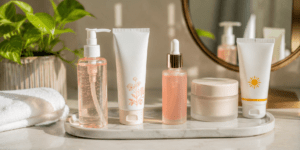
Ingredients to Avoid for Sensitive Skin
Not every trending skincare ingredient is suitable for delicate skin. In fact, many viral beauty products contain harsh formulas that may increase irritation.
Harsh Ingredients That May Cause Problems
Artificial Fragrances
Fragrances are one of the most common causes of skin irritation. Even products labeled as floral or refreshing may trigger redness.
Alcohol-Based Products
Some toners and acne treatments contain drying alcohols that weaken the skin barrier over time.
Strong Physical Scrubs
Large exfoliating particles can create tiny tears in the skin. Therefore, gentle chemical exfoliants are usually safer when used correctly.
Overuse of Active Ingredients
Using vitamin C, retinol, AHAs, and BHAs together can overload sensitive skin. Instead, keep your routine balanced and simple.
Best Ingredients That Calm Irritation
Choosing the right ingredients can help repair and strengthen sensitive skin naturally. Many dermatologists recommend barrier-supporting formulas for long-term results.
Helpful Ingredients for Sensitive Skin
Ceramides
Ceramides help rebuild the protective layer of the skin and reduce moisture loss.
Hyaluronic Acid
This ingredient attracts hydration and keeps the skin soft without feeling greasy.
Oat Extract
Oat-based skincare products are known for calming redness and itching.
Niacinamide
Niacinamide helps improve skin texture and supports barrier repair when used in moderate concentrations.

Lifestyle Habits That Improve Skin Health
Skincare products alone cannot fully protect sensitive skin. Your daily lifestyle also affects how your skin behaves.
Drink Enough Water
Hydration supports overall skin health and helps maintain softness and elasticity.
Manage Stress Levels
Stress often increases inflammation, which may lead to flare-ups or breakouts. Activities like yoga, meditation, or walking can help reduce skin sensitivity over time.
Sleep Properly
During sleep, the skin repairs itself naturally. Poor sleep habits may increase dullness and irritation.
Eat Skin-Friendly Foods
Foods rich in antioxidants, healthy fats, and vitamins support healthier skin from within. Fresh fruits, vegetables, nuts, and seeds are especially beneficial.

Sensitive Skin Product Comparison
People with sensitive skin often struggle to choose between lightweight and rich skincare products. The right choice usually depends on climate and skin type.
Lightweight Products
These products work well in humid weather and for oily sensitive skin. They absorb quickly and reduce greasy buildup.
Rich Cream-Based Products
Cream-based moisturizers provide extra nourishment during winter or for dry sensitive skin. Moreover, they help prevent moisture loss overnight.
When testing a new product, always perform a patch test first. Apply a small amount behind the ear or on the jawline before using it fully.
Seasonal Care Tips for Sensitive Skin
Weather changes can affect sensitive skin significantly. Therefore, your skincare routine should adapt according to the season.
Summer Skin Care
Use lightweight gel moisturizers and broad-spectrum sunscreen. Avoid heavy makeup that may clog pores during hot weather.
Winter Skin Care
Cold air often increases dryness and irritation. Switch to richer moisturizers and avoid long hot showers.
Monsoon Skin Care
Humidity may increase bacterial buildup and breakouts. Keep your skin clean but avoid overwashing.

Common Mistakes to Avoid
Many people unintentionally worsen their skin condition by following social media trends without understanding their skin type.
Using Too Many Products
Layering multiple serums and treatments can damage the skin barrier.
Skipping Sunscreen
Sun exposure increases inflammation and weakens sensitive skin over time.
Frequently Changing Products
Switching products every few days makes it difficult to identify what actually works.
Ignoring Expiry Dates
Expired skincare products may cause irritation or bacterial contamination.
Conclusion
Sensitive skin requires patience, consistency, and a gentle approach. Instead of following every beauty trend, focus on simple habits that protect and strengthen your skin barrier naturally.
By choosing calming ingredients, avoiding harsh products, and maintaining a healthy lifestyle, sensitive skin can become more balanced, comfortable, and radiant over time. Small daily improvements often create the biggest long-term results.