

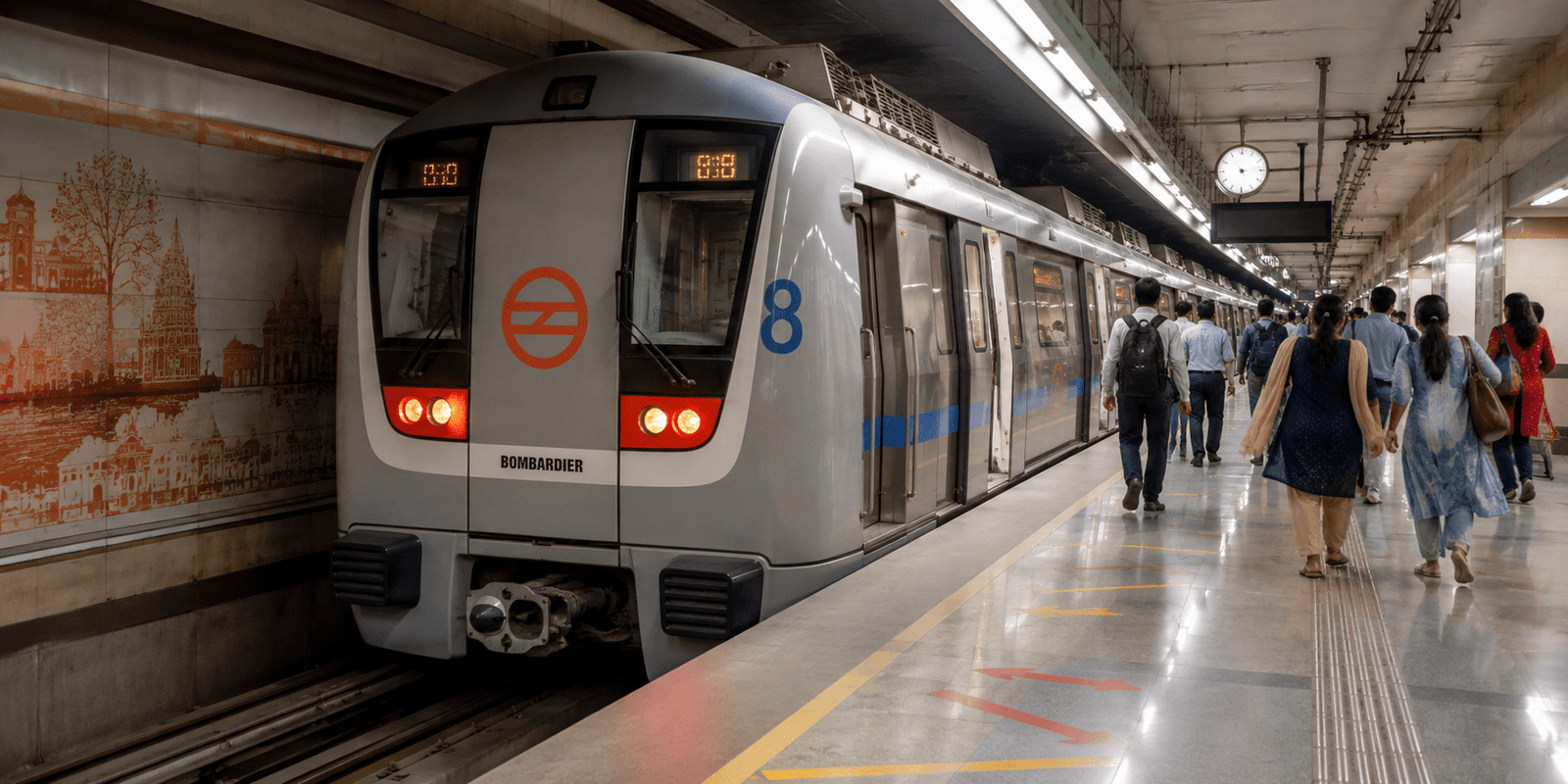
Delhi metro is one of the fastest and most affordable ways to travel across the capital city. Every day, millions of people use the metro to avoid traffic, reduce travel costs, and save valuable time. From students and office workers to tourists and families, the Delhi Metro has become an essential part of daily life.
If you are planning to explore Delhi comfortably, understanding the metro system can make your journey much easier. This guide shares practical travel tips, ticket information, route details, and useful advice for first-time travelers.
Why Delhi Metro Is the Best Travel Option
Delhi roads are often crowded with heavy traffic, especially during office hours. The Delhi Metro provides a reliable alternative that helps passengers reach destinations quickly without worrying about road congestion.
The metro network is clean, air-conditioned, affordable, and well-connected. Moreover, it connects important areas including railway stations, airports, shopping markets, business centers, and tourist attractions.
Passengers also appreciate the punctuality of metro services. Unlike buses and taxis that can get delayed in traffic, metro trains usually follow fixed schedules.
Major Benefits of Delhi Metro
| Feature | Benefit for Travelers |
|---|---|
| Fast Travel | Saves time during peak traffic |
| Affordable Fare | Budget-friendly for daily travel |
| Clean Stations | Comfortable travel experience |
| Wide Connectivity | Connects Delhi NCR areas |
| Safe Environment | CCTV and security checks available |
Understanding Delhi Metro Routes
The Delhi Metro network is divided into multiple color-coded lines. These lines help passengers identify routes easily and switch between different destinations without confusion.
Some of the most popular lines include the Yellow Line, Blue Line, Violet Line, Pink Line, and Airport Express Line. Interchange stations allow travelers to change trains and continue their journey smoothly.
Before traveling, passengers should check the route map or use metro apps for live updates and route planning.
Popular Delhi Metro Interchange Stations
Rajiv Chowk
Rajiv Chowk is one of the busiest interchange stations in Delhi. It connects the Blue Line and Yellow Line and provides access to Connaught Place.
Kashmere Gate
Kashmere Gate connects multiple metro lines and is useful for passengers traveling toward Old Delhi and ISBT terminals.
Hauz Khas
Hauz Khas is another important interchange station connecting the Yellow and Magenta Lines.
Smart Card vs Metro Token
Passengers can travel in the Delhi Metro using tokens or smart cards. However, frequent travelers usually prefer smart cards because they save both time and money.
Metro tokens are suitable for one-time travel. Passengers purchase tokens from ticket counters or vending machines before entering the station.
On the other hand, smart cards can be recharged online or at stations. They also offer small fare discounts and faster entry through automatic gates.
Why Smart Cards Are Better
- Faster entry and exit
- Avoid standing in ticket queues
- Rechargeable multiple times
- Small discounts on metro fares
- Convenient for daily travelers
Best Time to Travel in Delhi Metro
Travel timing can significantly affect your metro experience. Peak hours are usually crowded because office workers and students travel during these periods.
Morning rush hours generally occur between 8 AM and 11 AM. Evening rush hours are busiest between 5 PM and 8 PM.
If possible, tourists and casual travellers should use the metro during non-peak hours for a more comfortable experience.
Ideal Travel Timing
- Late morning for sightseeing
- Afternoon for shopping trips
- Early afternoon for comfortable seating
- Weekdays are usually busier than weekends
Important Delhi Metro Lines
Understanding major metro lines helps passengers travel more efficiently across Delhi NCR.
Yellow Line
The Yellow Line connects Samaypur Badli to HUDA City Centre. It covers important locations including New Delhi Railway Station, Chandni Chowk, and Gurgaon.
Blue Line
The Blue Line connects Dwarka with Noida and Vaishali. It is one of the busiest routes in the network.
Airport Express Line
This line provides fast connectivity between New Delhi and Indira Gandhi International Airport. Travelers carrying luggage often prefer this route.
Pink Line
The Pink Line forms a large ring around Delhi and connects many residential and commercial areas.
How Tourists Benefit from Delhi Metro
Tourists visiting Delhi can explore famous attractions easily through the metro network. Many historical places, markets, and cultural centers are located near metro stations.
For example, Chandni Chowk Metro Station gives access to Old Delhi markets and Jama Masjid. Similarly, Central Secretariat station is useful for visiting India Gate and nearby government buildings.
Travelers can also avoid expensive taxi fares by using metro services throughout the day.
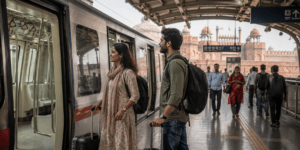
Safety Rules and Passenger Guidelines
Delhi Metro follows strict security and safety measures to ensure comfortable travel for passengers. Security checks are mandatory at every station.
Passengers should avoid carrying restricted items and follow station announcements carefully. Moreover, reserved seating areas should be respected for women, senior citizens, and differently-abled passengers.
Important Safety Tips
- Keep personal belongings secure
- Avoid standing near train doors
- Follow platform markings
- Use escalators carefully
- Do not rush during boarding
The metro system also uses CCTV surveillance and security personnel at stations for passenger safety.
Delhi Metro Facilities You Should Know
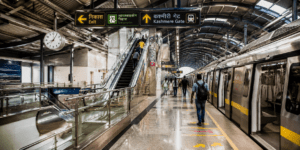
The Delhi Metro offers several facilities that improve the travel experience. Most stations provide elevators, escalators, drinking water, washrooms, and help desks.
Digital route maps and automatic announcements also help passengers identify stations easily. In addition, some stations include shopping outlets, cafes, and ATM services.
Mobile recharge and QR ticket systems have further simplified metro travel in recent years.
Common Mistakes Travelers Should Avoid
Many first-time travelers make small mistakes that can create unnecessary confusion during metro journeys.
One common mistake is entering the wrong platform without checking the train direction carefully. Another issue is traveling during peak hours without planning extra time.
Passengers should also recharge smart cards in advance to avoid delays at entry gates.
Useful Travel Advice
- Check the metro route before leaving
- Keep your smart card recharged
- Avoid carrying heavy luggage during rush hours
- Stand on the correct side of escalators
- Listen carefully to station announcements
Future Expansion of Delhi Metro
The Delhi Metro network continues to expand with new routes and improved connectivity. Future projects aim to connect more residential areas, business zones, and nearby cities.
These expansions will reduce traffic pressure further while making public transport more accessible for millions of passengers.
Moreover, modern technologies and better facilities are expected to improve passenger convenience in the coming years.
Conclusion
Delhi metro has transformed urban travel by offering fast, affordable, and reliable transportation across the city. Whether you are a daily commuter or a tourist, understanding metro routes, timings, smart cards, and travel rules can help you enjoy a smooth journey.
With growing connectivity, modern facilities, and excellent accessibility, the Delhi Metro remains one of the smartest ways to explore Delhi comfortably and efficiently.