

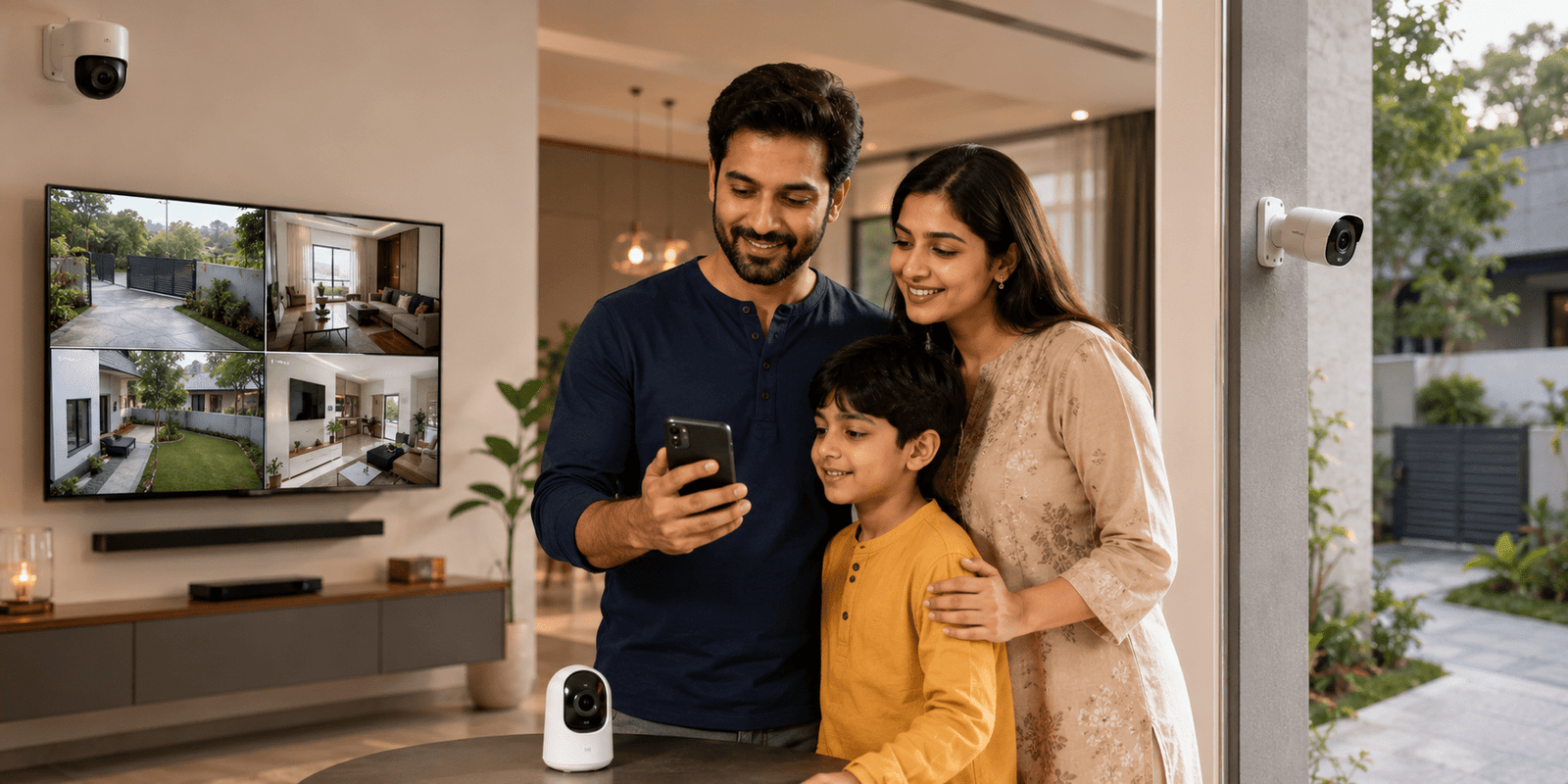
Home security cameras have become one of the smartest investments for modern homeowners who want safety, convenience, and peace of mind. Whether you live in a busy city apartment or a large independent house, a reliable surveillance system helps protect your family and property from theft, unauthorized entry, and unexpected incidents.
Today’s smart security cameras offer much more than simple video recording. Features like AI motion detection, cloud storage, smartphone alerts, and night vision have completely changed how home monitoring works. In addition, modern systems are easier to install and more affordable than ever before.
1. Why Home Security Cameras Matter
Security concerns are increasing in both urban and suburban areas. Therefore, homeowners are looking for smarter ways to secure their property without depending only on guards or traditional locks.
Modern home security cameras help monitor entrances, garages, balconies, gardens, and indoor spaces in real time. Most systems also allow remote access through mobile apps. As a result, users can check live footage anytime from anywhere.
Another major benefit is crime prevention. Visible surveillance cameras often discourage intruders before they attempt any illegal activity. Moreover, video recordings can provide valuable evidence if an incident occurs.
Key Benefits of Security Cameras
| Feature | Benefit |
|---|---|
| Motion Detection | Sends instant alerts for suspicious movement |
| Night Vision | Provides visibility during darkness |
| Cloud Storage | Saves footage securely online |
| Two-Way Audio | Enables communication remotely |
| AI Detection | Identifies people, pets, or vehicles |
2. Types of Home Security Cameras
Choosing the right security system depends on your home size, budget, and monitoring needs. Different camera types serve different purposes.
Indoor Cameras
Indoor cameras are designed for living rooms, hallways, nurseries, or office spaces. They are compact, stylish, and easy to install. Many models include voice assistants and mobile connectivity.
Outdoor Cameras
Outdoor cameras are weather-resistant and built for external monitoring. These cameras usually include waterproof housing, enhanced night vision, and wider viewing angles.
Wireless Cameras
Wireless home security cameras are becoming extremely popular because they reduce cable clutter and simplify installation. They connect through Wi-Fi and can be controlled using mobile applications.
Video Doorbell Cameras
Doorbell cameras combine security and convenience. They allow homeowners to see visitors, delivery agents, or strangers directly from their smartphones.
3. Essential Features to Look For
Not all cameras provide the same performance. Before buying, it is important to evaluate the features that truly improve safety and user experience.
HD Video Quality
Clear footage is essential for identifying faces, vehicles, and movements. A minimum of 1080p resolution is recommended for modern surveillance systems.
Night Vision
Night vision technology allows cameras to record clearly in low-light conditions. Some premium models even offer color night vision for better detail.
Motion Alerts
Smart motion detection helps reduce unnecessary recordings. Instead of recording continuously, the system sends alerts only when movement is detected.
Cloud and Local Storage
Some cameras use cloud subscriptions, while others offer memory card support. A combination of both provides better backup security.
Two-Way Communication
Built-in microphones and speakers allow homeowners to communicate remotely. This feature is especially useful for deliveries or visitor interactions.
4. Indoor vs Outdoor Camera Comparison
Many homeowners get confused between indoor and outdoor security devices. However, understanding the differences makes the buying decision easier.
Indoor Security Systems
Indoor units focus more on convenience and compact design. They are suitable for monitoring children, elderly family members, and pets.
Outdoor Surveillance Systems
Outdoor cameras prioritize durability and wider coverage. These systems are ideal for gates, parking areas, rooftops, and backyards.
Which One Should You Choose?
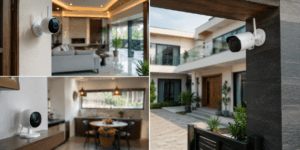
If your budget allows, combining both systems creates complete home protection. Indoor cameras help monitor activities inside the property, while outdoor cameras strengthen perimeter security.
5. Smart Integration and AI Technology
Artificial intelligence has transformed modern security systems. Today’s smart home security cameras can identify specific activities instead of simply recording everything.
For example, AI cameras can differentiate between humans, animals, and moving vehicles. This reduces false alerts caused by wind, shadows, or stray animals.
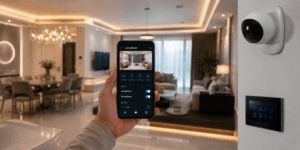
Moreover, integration with smart home devices improves convenience. Many systems now work with voice assistants, smart lighting, and automated alarms.
Advanced Smart Features
Facial Recognition
Some premium cameras can recognize familiar faces and notify homeowners about unknown visitors.
Smart Tracking
AI-powered cameras automatically follow movement across rooms or outdoor spaces.
Voice Assistant Support
Integration with smart speakers allows hands-free monitoring and control.
6. Installation Tips for Better Security
Even the best camera system may fail if installed incorrectly. Therefore, placement plays a critical role in effective surveillance.
Best Areas to Install Cameras
Main Entrance
The front door is one of the most important monitoring points.
Garage and Parking Area
Vehicle theft and unauthorized access often happen in these areas.
Backyard and Side Paths
Hidden corners should always be covered to reduce blind spots.
Avoid These Placement Mistakes
Do not install cameras directly facing strong sunlight because glare can reduce image clarity. Similarly, avoid placing cameras too high because facial details may become unclear.
In addition, secure your Wi-Fi network with strong passwords to prevent unauthorized access to camera feeds.
7. Common Mistakes to Avoid
Many buyers focus only on price and ignore long-term performance. This often leads to poor security coverage and unreliable footage.
One common mistake is buying low-resolution cameras. Cheap devices may fail to capture important details during emergencies.
Another issue is insufficient storage. If recordings are overwritten too quickly, important evidence may disappear.
Moreover, homeowners sometimes ignore software updates. Updating firmware regularly improves security and protects systems from cyber threats.
8. Final Thoughts on Home Protection
Home security cameras are no longer luxury gadgets reserved for large properties. They have become practical tools for everyday safety and convenience. With advanced AI features, remote monitoring, and smart integration, modern systems offer stronger protection than traditional surveillance methods.
Whether you choose indoor cameras, outdoor systems, or wireless smart devices, selecting the right setup depends on your specific needs and budget. Most importantly, proper installation and regular maintenance ensure long-term performance and reliability.
Investing in quality home security cameras today can help create a safer and smarter living environment for your entire family.