

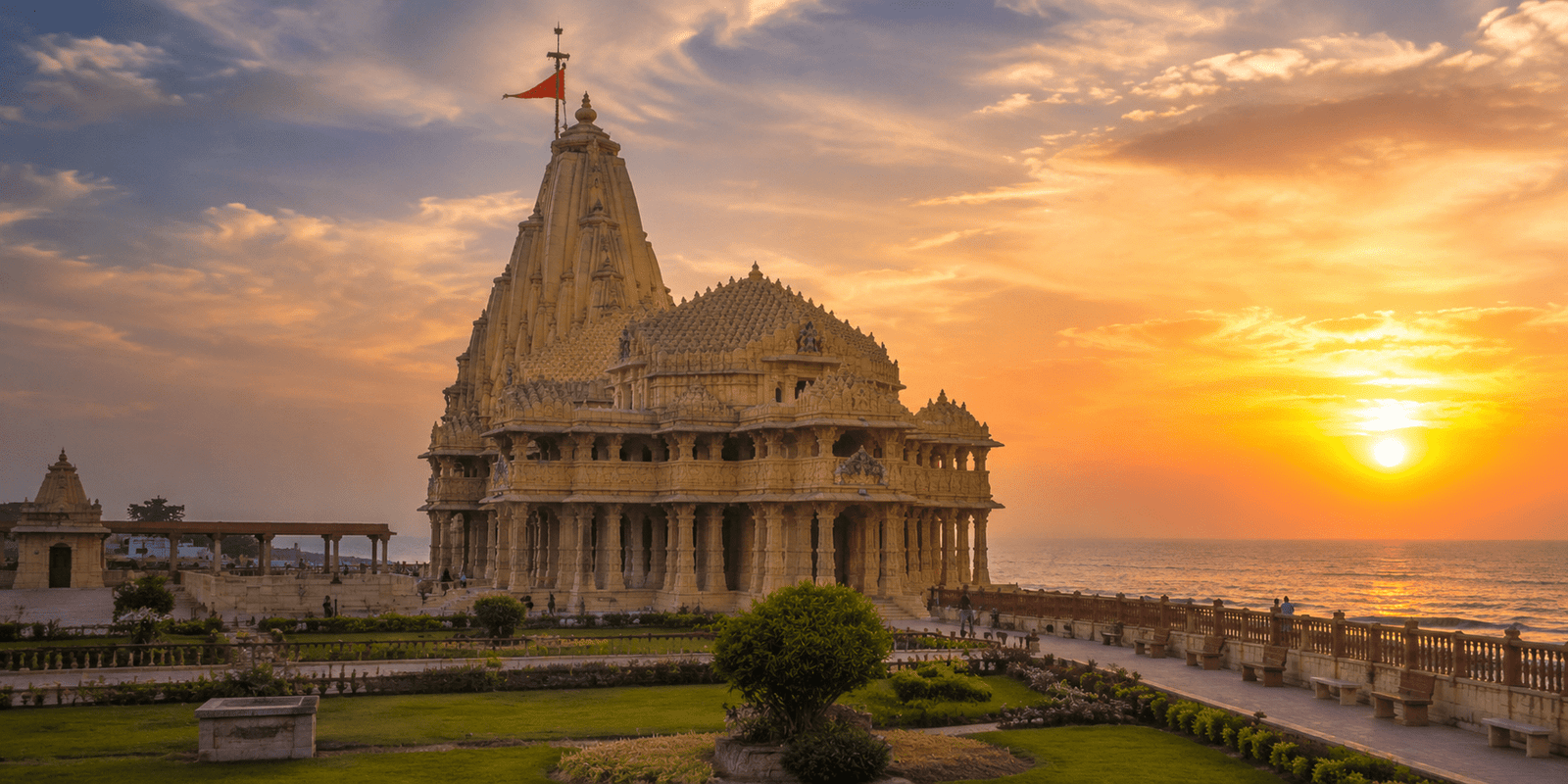
Somnath Temple is one of the most sacred pilgrimage destinations in India and a timeless symbol of devotion, history, and spirituality. Located on the western coast of Gujarat near the Arabian Sea, this revered temple attracts millions of visitors every year who come to experience its peaceful atmosphere and spiritual significance.
Known as the first Jyotirlinga of Lord Shiva, the temple holds immense importance in Hindu culture. Beyond its religious value, the destination also offers breathtaking coastal views, rich architecture, and a calming environment that makes every journey memorable.
Whether you are a spiritual traveler, history lover, or someone looking for cultural experiences, this guide will help you explore everything about Somnath Temple in a practical and meaningful way.
History of Somnath Temple
The history of Somnath Temple is deeply connected with Indian civilization and spirituality. According to ancient beliefs, the temple was originally built by the Moon God, Soma, in gold. Over centuries, it was reconstructed multiple times by different rulers after facing invasions and destruction.
Despite many challenges throughout history, the temple continued to stand as a symbol of faith and resilience. The present structure was rebuilt in traditional Chalukya architectural style and inaugurated in 1951.
The temple’s historical significance attracts not only pilgrims but also historians and cultural travelers from around the world. Walking through the temple complex gives visitors a strong sense of India’s spiritual heritage and enduring traditions.
Spiritual Importance of Somnath Temple
Somnath Temple is considered the first among the twelve Jyotirlingas of Lord Shiva. Devotees believe that visiting this sacred place brings inner peace, spiritual strength, and blessings.
The temple atmosphere becomes especially powerful during morning and evening aarti ceremonies. The sound of bells, Vedic chants, and the ocean waves together create a deeply calming experience.
Many pilgrims also visit during Maha Shivaratri, when the temple is beautifully decorated and spiritual celebrations continue throughout the day and night.
For many travelers, the journey to Somnath Temple is not just religious but emotional and transformative as well.
Architecture and Temple Design
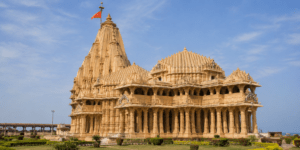
The architecture of Somnath Temple reflects the brilliance of traditional Indian craftsmanship. Built in the Kailash Mahameru Prasad style, the temple showcases intricate carvings, massive pillars, and beautifully designed domes.
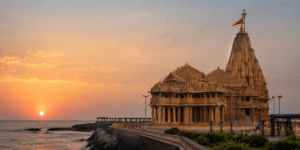
One of the most fascinating elements is the temple’s seaside location. Standing near the Arabian Sea, the temple offers stunning sunset views that add to its spiritual charm.
The temple complex is clean, organized, and designed to handle large numbers of visitors comfortably. The detailed stone work and symmetrical structure make it a favorite destination for architecture enthusiasts and photographers.
| Feature | Details |
|---|---|
| Location | Prabhas Patan, Gujarat |
| Main Deity | Lord Shiva |
| Temple Style | Chalukya Architecture |
| Famous For | First Jyotirlinga |
| Best Visiting Time | October to March |
| Nearby Airport | Diu Airport |
Best Time to Visit Somnath Temple
The ideal time to visit Somnath Temple is between October and March. During these months, the weather remains pleasant and comfortable for sightseeing and temple visits.
Winters are especially suitable because the coastal climate stays cool and refreshing. Travelers can explore nearby attractions without facing extreme heat.
However, devotees who wish to experience spiritual festivals often prefer visiting during Maha Shivaratri or Kartik Purnima. These occasions bring vibrant celebrations and devotional energy to the temple town.
Monsoon season also gives the coastal area a beautiful appearance, although heavy rainfall may affect outdoor travel plans.
How to Reach Somnath Temple
Reaching Somnath Temple is convenient because the destination is well connected by road, rail, and air.
By Air
The nearest airport is Diu Airport, located around 85 kilometers away. From the airport, travelers can hire taxis or private vehicles to reach the temple.
By Train
Somnath Railway Station connects the town with major cities including Ahmedabad, Rajkot, and Veraval. The railway route is comfortable and budget-friendly for most travelers.
By Road
Gujarat has excellent road connectivity, making road trips to Somnath smooth and enjoyable. Private buses, taxis, and self-drive vehicles are commonly used by tourists.
Travelers planning a spiritual road journey across Gujarat often include Somnath Temple along with Dwarka and Gir National Park in their itinerary.
Nearby Attractions Around Somnath
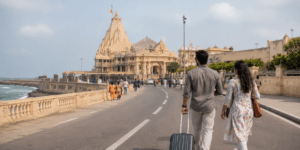
Apart from the temple itself, the surrounding region offers several interesting attractions that visitors should explore.
Triveni Sangam
This sacred confluence of rivers is an important spiritual spot located close to the temple. Many pilgrims take a holy dip here before visiting the shrine.
Bhalka Tirth
Bhalka Tirth is believed to be the place where Lord Krishna left his earthly form. The peaceful environment and historical importance attract many devotees.
Somnath Beach
Located near the temple complex, Somnath Beach offers a relaxing experience with beautiful sea views and refreshing coastal winds.
Light and Sound Show
The evening light and sound show at the temple narrates the history of Somnath Temple in an engaging and emotional way. It is highly recommended for first-time visitors.

Essential Travel Tips for Visitors
Planning your trip properly can make your Somnath Temple experience smoother and more enjoyable.
Dress Modestly
As it is a sacred religious site, visitors should wear respectful and comfortable clothing.
Follow Temple Rules
Mobile phones and photography may be restricted in certain areas inside the temple complex. Always follow security instructions.
Attend Evening Aarti
The evening aarti is one of the most memorable spiritual experiences at Somnath Temple. Arriving early helps you find a good place for darshan.
Stay Hydrated
If you are visiting during warmer months, carry water and light snacks while exploring nearby attractions.
Book Hotels Early
During festival seasons and holidays, hotels near the temple become crowded quickly. Advance booking is recommended for a comfortable stay.
Conclusion
Somnath Temple is far more than just a religious destination. It represents devotion, resilience, history, and the timeless spiritual essence of India. From its sacred Jyotirlinga significance to its stunning coastal setting, every part of the journey leaves a lasting impression on visitors.
Whether you are planning a pilgrimage, cultural exploration, or peaceful getaway, Somnath Temple offers a meaningful travel experience filled with spirituality and heritage. With proper planning and the right travel season, your visit can become both memorable and deeply inspiring.