

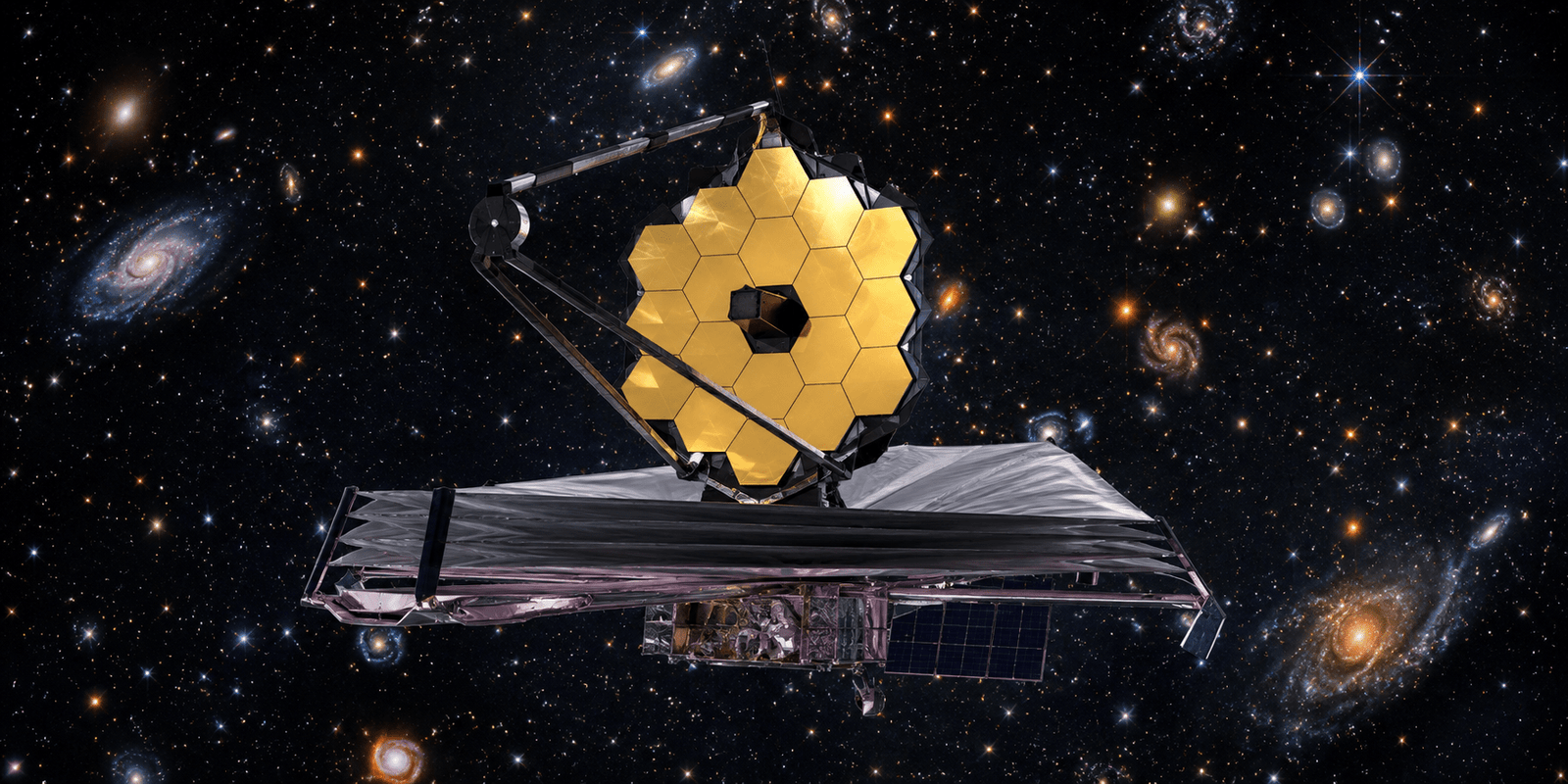
James webb telescope has completely changed how scientists explore the universe. Since its launch by NASA, this advanced observatory has delivered breathtaking discoveries, detailed galaxy images, and valuable scientific data that were impossible to capture before.
Unlike older telescopes, the James Webb Space Telescope uses powerful infrared technology to look deeper into space and further back in time. As a result, astronomers can now study the birth of stars, distant planets, and ancient galaxies with exceptional clarity.
What Is the James Webb Telescope?
The James Webb Telescope is the world’s most advanced space observatory. It was designed to study the universe using infrared light. This allows scientists to observe objects hidden behind cosmic dust and explore extremely distant galaxies.
The telescope was launched in December 2021 through a collaboration between NASA, European Space Agency, and Canadian Space Agency.
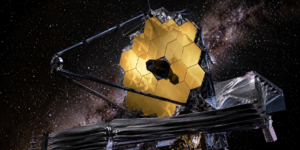
One of the biggest reasons behind its popularity is its giant gold-coated mirror. This mirror helps collect more light, producing sharper and more detailed images from deep space.
Why the Telescope Is Different From Hubble
Many people compare the James Webb Telescope with the famous Hubble Space Telescope. Although both telescopes are revolutionary, they work differently.
Hubble mainly observes visible and ultraviolet light. In contrast, James Webb focuses on infrared observations. Therefore, Webb can see through dust clouds and detect very distant cosmic objects that Hubble cannot capture clearly.
Quick Comparison Table
| Feature | Hubble Telescope | James Webb Telescope |
|---|---|---|
| Launch Year | 1990 | 2021 |
| Main Technology | Visible Light | Infrared Light |
| Mirror Size | 2.4 meters | 6.5 meters |
| Main Purpose | Galaxy Observation | Deep Universe Research |
| Orbit Location | Earth Orbit | L2 Space Point |
The larger mirror and advanced instruments make Webb far more powerful for studying the early universe.
8 Amazing Discoveries by James Webb Telescope
The telescope has already made several ground-breaking discoveries that are reshaping astronomy.
Discovery of Ancient Galaxies
Scientists used the James Webb Telescope to detect some of the oldest galaxies ever observed. These galaxies formed shortly after the Big Bang, giving researchers insight into the universe’s early stages.
Detailed Exoplanet Atmospheres
Webb has analyzed atmospheres of distant planets outside our solar system. Researchers detected gases like water vapor and carbon dioxide, which are important for studying possible life-supporting environments.
Stunning Nebula Images
The telescope captured incredibly detailed images of colorful nebulae where stars are born. These visuals help astronomers understand how stars and planetary systems develop over time.
Black Hole Research
James Webb has provided improved observations of supermassive black holes located at the center of galaxies. This research may explain how galaxies evolve.
Star Formation Studies
Scientists are now able to study newborn stars hidden inside dense dust clouds. Earlier telescopes struggled to observe these regions clearly.
Water in Space
One of the most exciting findings is evidence of water molecules in different regions of space. This increases interest in future life exploration missions.
Unexpected Galaxy Structures
Researchers discovered galaxies with unusual shapes and structures that challenge earlier theories about cosmic evolution.
Improved Cosmic Mapping
Webb’s high-resolution imaging is helping scientists create better maps of the universe and identify distant celestial objects more accurately.
How James Webb Telescope Captures Images
The telescope uses infrared cameras and spectrometers to detect heat signals from space objects. Because infrared light travels through dust clouds more effectively, Webb can observe hidden regions that ordinary telescopes cannot see.
Its giant mirror collects light from distant stars and galaxies. Then, onboard instruments process this information into high-quality scientific images.
Moreover, the telescope operates far from Earth at a location called the second Lagrange point, or L2. This position helps maintain extremely cold temperatures required for infrared observations.
Major Technologies Used in the Telescope
The James Webb Telescope combines several advanced engineering technologies that make it one of the most sophisticated scientific instruments ever built.
Gold-Coated Mirror
The telescope’s mirror consists of 18 hexagonal segments coated with gold. Gold improves infrared light reflection, helping Webb observe distant cosmic objects more effectively.
Sunshield Protection
Webb uses a massive five-layer sunshield that protects it from heat and sunlight. This keeps its instruments extremely cold for accurate infrared detection.
Infrared Instruments
The telescope includes advanced instruments like NIRCam and MIRI, which allow researchers to study galaxies, stars, and planets in exceptional detail.
Future Missions and Research Goals
The James Webb Telescope is expected to continue delivering valuable discoveries for many years. Scientists plan to use it for deeper exoplanet research, galaxy formation studies, and cosmic evolution analysis.
Researchers also hope Webb will help answer important questions about dark matter, black holes, and the origins of the universe.
In addition, future observations may identify planets with conditions suitable for life. This possibility keeps both scientists and the public highly interested in Webb’s mission.
Why James Webb Telescope Matters for Humanity
The James Webb Telescope represents a major achievement in science and technology. It expands human understanding of space while inspiring future generations of researchers and engineers.
Its discoveries are not only important for astronomy but also for understanding humanity’s place in the universe. Every image and data point adds new knowledge about cosmic history.
Furthermore, Webb demonstrates how international cooperation in science can lead to extraordinary innovation and discovery.
Conclusion
The james webb telescope is one of the most important scientific projects in modern history. From ancient galaxies to distant exoplanets, it continues to reveal extraordinary details about the universe.
Its advanced infrared technology, massive mirror, and groundbreaking discoveries are transforming space research at an incredible pace. As scientists continue exploring the cosmos through Webb, humanity will gain a deeper understanding of how the universe began and how it continues to evolve.