

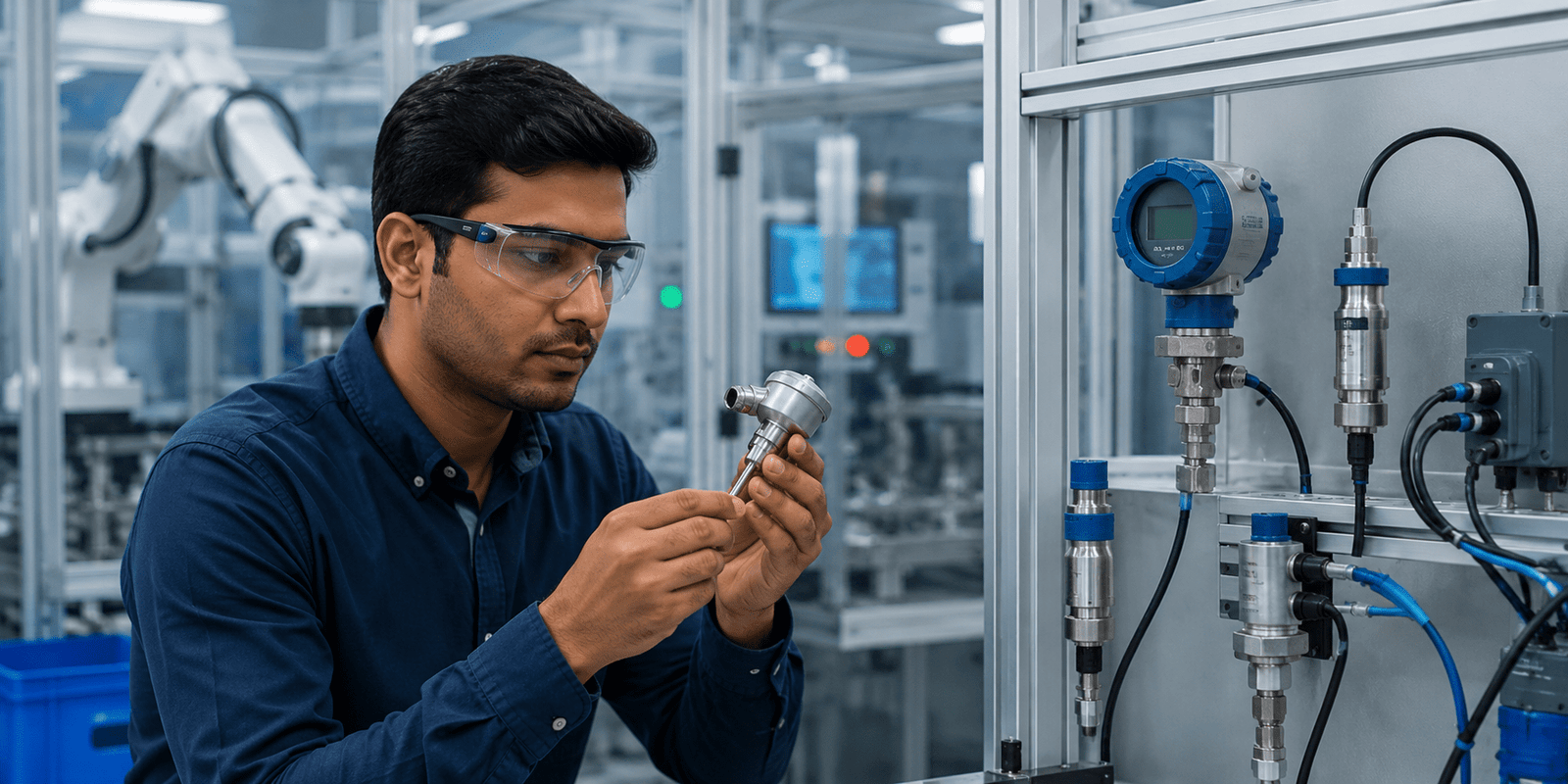
Temperature sensor technology plays a critical role in modern electronics, industrial automation, healthcare devices, and smart home systems. From monitoring room temperature to controlling complex manufacturing processes, these sensors help maintain accuracy, efficiency, and safety.
Today, temperature measurement is more important than ever. Industries rely on precise thermal monitoring to improve product quality, reduce energy consumption, and prevent equipment failures. Understanding how temperature sensors work and where they are used can help businesses and individuals make informed decisions when selecting the right sensing solution.
What Is a Temperature Sensor?
A temperature sensor is an electronic device that detects and measures temperature changes in its surrounding environment. It converts thermal energy into an electrical signal that can be interpreted by monitoring systems, controllers, or computers.
These sensors are used wherever temperature monitoring is necessary. Whether in industrial plants, automobiles, medical equipment, or household appliances, accurate temperature measurement helps maintain performance and safety.
Why Temperature Measurement Matters
Temperature directly affects the efficiency and reliability of machines, products, and processes. Even small temperature variations can influence product quality, energy consumption, and equipment lifespan.
How Does a Temperature Sensor Work?
A temperature sensor works by detecting changes in thermal energy and converting them into measurable electrical signals. The sensing element responds to temperature variations through changes in resistance, voltage, or current.
Different sensor technologies use different methods to achieve this. However, the goal remains the same: providing accurate temperature data for monitoring and control.
Key Components
- Sensing element
- Signal processing circuit
- Output interface
- Protective housing
These components work together to deliver reliable temperature measurements in various environments.
Five Important Types of Temperature Sensors
Several temperature sensing technologies are available today. Each type offers unique advantages depending on the application.
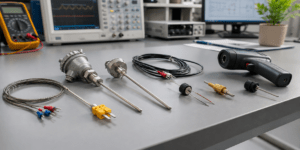
1. Thermocouple Sensors
Thermocouples are among the most widely used temperature sensors. They generate a voltage when two dissimilar metals are joined and exposed to temperature differences.
Advantages:
- Wide temperature range
- Durable construction
- Cost-effective solution
2. RTD Sensors
Resistance Temperature Detectors (RTDs) measure temperature through changes in electrical resistance.
Advantages:
- High accuracy
- Excellent stability
- Reliable long-term performance
3. Thermistor Sensors
Thermistors are highly sensitive resistive devices designed for precise temperature measurement.
Advantages:
- Fast response time
- Compact size
- High sensitivity
4. Semiconductor Sensors
These sensors use integrated circuits to measure temperature electronically.
Advantages:
- Easy integration
- Digital output options
- Suitable for consumer electronics
5. Infrared Temperature Sensors
Infrared sensors measure temperature without physical contact.
Advantages:
- Non-contact measurement
- Fast readings
- Ideal for moving objects
Comparison Table
| Sensor Type | Accuracy | Cost | Temperature Range | Common Applications |
|---|---|---|---|---|
| Thermocouple | Moderate | Low | Very Wide | Industrial processes |
| RTD | High | Medium | Wide | Laboratories |
| Thermistor | High | Low | Moderate | Medical devices |
| Semiconductor | Moderate | Low | Limited | Consumer electronics |
| Infrared | High | Medium | Wide | Non-contact monitoring |
Applications of Temperature Sensors
Temperature sensors are used across countless industries and technologies.
Industrial Automation
Manufacturing plants use sensors to monitor machinery, production lines, and industrial processes. Accurate thermal monitoring prevents overheating and improves efficiency.
Healthcare Equipment
Medical devices such as patient monitors, incubators, and diagnostic equipment rely on temperature sensors for accurate readings and safe operation.
Automotive Industry
Modern vehicles use temperature sensors to monitor engines, batteries, cooling systems, and cabin environments.
Smart Homes
Smart thermostats and home automation systems use sensors to optimize comfort and energy efficiency.
Food and Beverage Industry
Temperature monitoring ensures food safety during processing, storage, and transportation.

Benefits of Using Temperature Sensors
Temperature sensors provide several advantages across different applications.
Improved Safety
Monitoring temperature helps detect abnormal conditions before they become dangerous.
Better Efficiency
Real-time data allows systems to operate at optimal performance levels.
Reduced Maintenance Costs
Early detection of overheating can prevent equipment failures and costly repairs.
Enhanced Product Quality
Consistent temperature control improves manufacturing accuracy and product consistency.
Energy Savings
Proper temperature regulation reduces unnecessary energy consumption.
Choosing the Right Temperature Sensor
Selecting the appropriate sensor depends on several factors.
Consider the Temperature Range
Different sensors are designed for specific temperature limits. Choosing the correct range ensures accurate performance.
Evaluate Accuracy Requirements
High-precision applications such as laboratories often require RTD or thermistor sensors.
Assess Environmental Conditions
Humidity, vibration, dust, and chemical exposure can influence sensor selection.
Determine Response Time Needs
Fast-changing environments may require sensors with rapid response characteristics.
By carefully evaluating these factors, organizations can choose a temperature sensor that delivers reliable and cost-effective performance.
Future Trends in Temperature Sensing
Temperature sensing technology continues to evolve rapidly. Smart sensors connected through the Internet of Things (IoT) are becoming increasingly common.
Wireless monitoring systems, artificial intelligence integration, and cloud-based analytics are transforming how temperature data is collected and used. These innovations enable predictive maintenance, improved energy management, and more efficient industrial operations.
As technology advances, temperature sensors will become even more accurate, compact, and intelligent.
Conclusion
A temperature sensor is an essential component in modern technology, helping industries, businesses, and consumers monitor and control thermal conditions effectively. From thermocouples and RTDs to infrared and semiconductor solutions, each sensor type offers unique benefits for specific applications.
Understanding the five important types and uses of temperature sensors can help you select the right solution for your needs. As automation, IoT, and smart technologies continue to expand, the importance of accurate temperature monitoring will only grow in the future.