

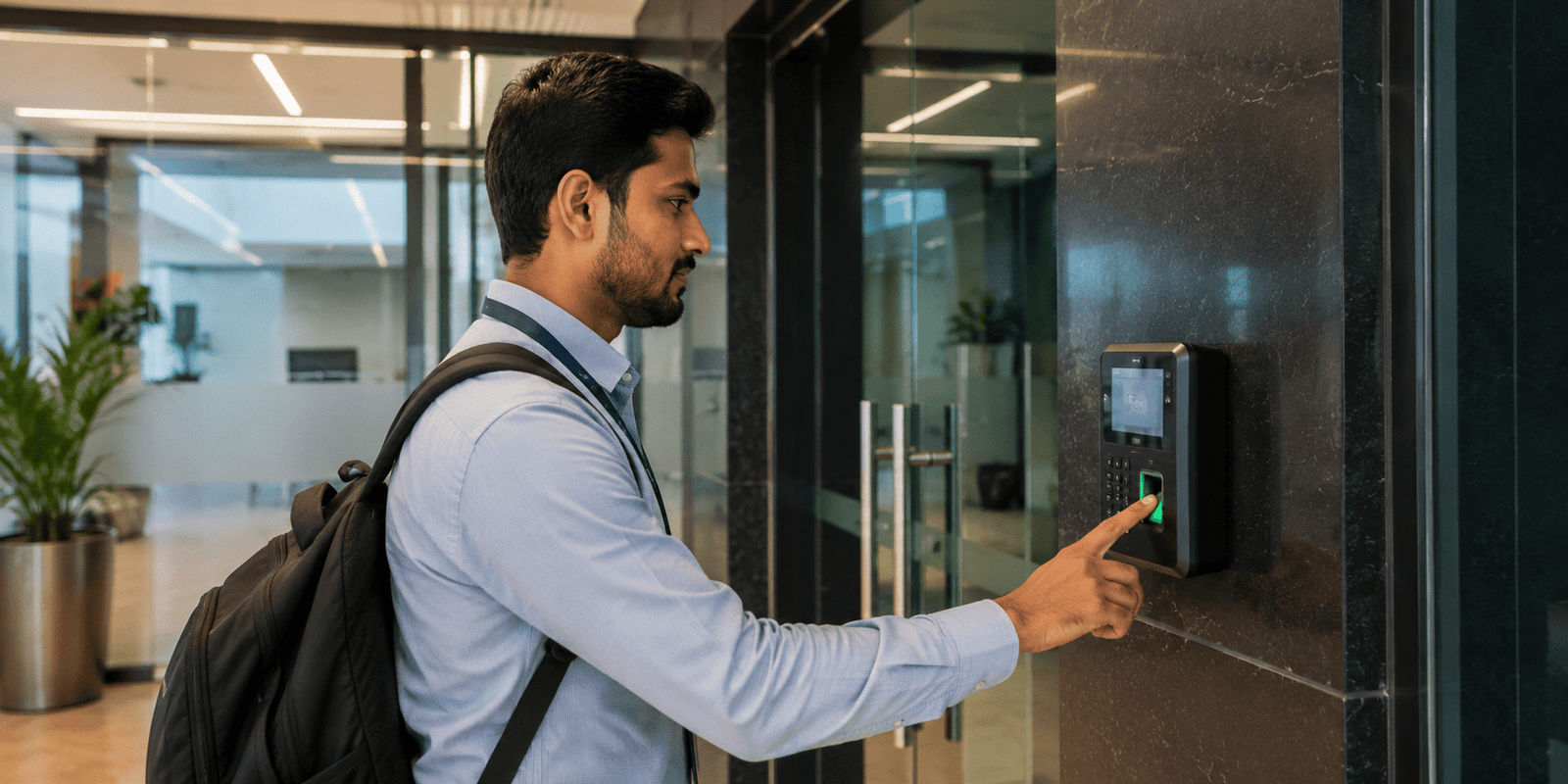
Biometric attendance has become one of the most reliable solutions for employee tracking in modern workplaces. Businesses today want accurate attendance records, better workforce management, and improved office security. Traditional attendance methods like paper registers and manual entries often create errors, buddy punching, and payroll confusion. However, biometric systems solve these issues with speed and accuracy.
Modern companies now use fingerprint scanning, facial recognition, and iris scanning technologies to manage employee attendance efficiently. As a result, HR teams save time while employees experience a smoother attendance process.
What Is Biometric Attendance?
Biometric attendance is a smart attendance tracking method that uses unique biological traits to identify employees. These traits may include fingerprints, facial recognition, palm scans, or iris detection.
Unlike traditional attendance systems, biometric technology cannot be easily manipulated. Therefore, businesses gain more accurate attendance records and reduce fraudulent activities in the workplace.
Companies commonly install biometric devices near office entrances or reception areas. Employees simply scan their fingerprint or face to mark attendance. The data is then stored automatically in attendance management software.
Common Types of Biometric Attendance Systems
| Biometric Type | Main Usage | Advantages |
|---|---|---|
| Fingerprint Scanner | Office attendance tracking | Affordable and accurate |
| Facial Recognition | Contactless attendance | Fast and hygienic |
| Iris Scanner | High-security workplaces | Very secure |
| Palm Recognition | Advanced corporate systems | Reliable identification |

Why Businesses Need Employee Tracking
Employee tracking is important for every organization because it improves productivity, discipline, and operational efficiency. Without a proper tracking system, companies may struggle with attendance fraud, late arrivals, and inaccurate payroll processing.
Biometric attendance systems help organizations maintain transparency. Moreover, managers can monitor attendance records in real time and generate reports instantly.
Small businesses also benefit from employee tracking because it reduces manual HR work. Instead of maintaining paper records, attendance data becomes digitally organized and easy to access.
Problems with Traditional Attendance Methods
Traditional attendance systems often create several challenges:
- Manual attendance errors
- Fake attendance entries
- Time theft
- Payroll miscalculations
- Difficulty in tracking remote staff
Because of these issues, many businesses are switching to biometric attendance solutions for better workforce management.
Key Features of Biometric Attendance Systems
Modern biometric attendance systems include advanced features that improve workplace operations. These systems are no longer limited to simple fingerprint machines.
Real-Time Attendance Monitoring
Managers can monitor employee attendance instantly from a dashboard. This feature is especially useful for companies with multiple office locations.
Payroll Integration
Many attendance systems integrate directly with payroll software. As a result, salary calculations become faster and more accurate.
Cloud-Based Data Storage
Cloud technology allows businesses to store attendance data securely online. Therefore, HR teams can access reports anytime and from any location.
Mobile App Support
Some biometric attendance solutions provide mobile applications for attendance tracking. This is useful for remote teams and field employees.

Benefits of Biometric Attendance for Companies
Biometric attendance offers several benefits for businesses of all sizes. It improves accuracy, security, and employee accountability.
Improved Accuracy
Since biometric data is unique for every employee, attendance records become highly accurate. This eliminates duplicate entries and buddy punching.
Better Workplace Security
Biometric attendance systems restrict unauthorized access to office premises. Therefore, businesses create a safer working environment.
Faster Attendance Process
Employees can mark attendance within seconds. Consequently, long queues and manual verification delays are reduced.
Reduced Administrative Work
HR departments spend less time managing attendance records manually. Automated systems simplify attendance management and reporting.
Increased Employee Discipline
Employees are more likely to follow office timings when attendance tracking becomes transparent and automated.

Biometric Attendance vs Traditional Attendance
Many companies compare biometric attendance with traditional methods before upgrading their systems. Although manual attendance systems may appear simple, they often create long-term operational issues.
Traditional Attendance Systems
Traditional systems rely on registers, ID cards, or manual entries. These methods are time-consuming and less secure.
Biometric Attendance Systems
Biometric systems automate attendance tracking and improve reliability. In addition, they provide digital records and advanced reporting features.
Businesses looking for long-term efficiency usually prefer biometric solutions because they save time and improve workforce transparency.
How to Choose the Right Attendance System
Choosing the right biometric attendance system depends on business requirements, office size, and budget.
Consider Office Size
Small businesses may prefer basic fingerprint scanners, while larger organizations may require facial recognition systems with cloud support.
Check Software Compatibility
The attendance system should integrate smoothly with HR and payroll software.
Evaluate Security Features
Companies handling sensitive data should choose systems with advanced security and encrypted storage.
Focus on Ease of Use
Employees should be able to use the system without technical difficulty. A user-friendly interface improves overall adoption.

Future of Biometric Attendance Technology
Biometric attendance technology continues to evolve rapidly. Artificial intelligence and cloud computing are making attendance systems smarter and more efficient.
Facial recognition technology is becoming more popular because it supports contactless attendance tracking. Similarly, mobile-based biometric systems are helping remote and hybrid teams manage attendance easily.
In the future, businesses may use AI-powered attendance analytics to understand employee work patterns and improve productivity. Therefore, biometric attendance will continue to play an important role in modern workforce management.
Conclusion
Biometric attendance is transforming employee tracking for modern businesses. It improves attendance accuracy, reduces manual errors, and strengthens workplace security. Companies using biometric systems also benefit from faster payroll processing and better employee discipline.
As workplaces continue to adopt digital technologies, biometric attendance solutions will become even more advanced and efficient. Businesses that invest in smart attendance systems today can improve operational efficiency and create a more transparent work environment.