


Introduction
Face id has rapidly transformed the way we unlock devices and secure our digital lives. Instead of typing passwords or using fingerprints, users can now access smartphones, apps, and even payment systems just by looking at their screen.
This technology is not only convenient but also designed with advanced security layers. Moreover, it is becoming a standard feature across smartphones, banking apps, and even workplace systems.
In this blog, we will explore how this facial recognition system works, its real-world uses, benefits, and whether it is truly safe in today’s digital environment.
Table of Contents
- What Is Face ID Technology
- How Face ID Works in Real Life
- Key Benefits of Face ID Security
- Face ID vs Fingerprint Authentication
- Everyday Uses of Face ID
- Is Face ID Safe and Secure
- Future of Face ID Technology
- Common Mistakes and Limitations
What Is Face ID Technology
Face ID is a biometric authentication system that uses facial recognition to verify a user’s identity. Instead of relying on passwords, it scans your face and matches it with stored data.
This technology uses sensors, cameras, and machine learning to create a detailed 3D map of your face. Therefore, it can recognize you even if your appearance changes slightly.
In addition, it adapts over time. For example, if you grow a beard or wear glasses, the system updates your facial data automatically.
How Face ID Works in Real Life
The working process of this technology is more advanced than most people think.
First, the device projects invisible infrared dots onto your face. Then, it captures this pattern using a specialized camera. This creates a depth map that is highly secure and difficult to replicate.
After that, the system compares this data with the stored facial profile. If it matches, the device unlocks instantly.
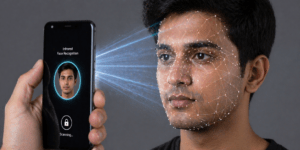
Moreover, artificial intelligence improves accuracy over time, making the recognition process faster and more reliable.
Key Benefits of Face ID Security
There are several reasons why face-based authentication is gaining popularity.
1. Convenience
You don’t need to remember passwords or patterns. Simply look at your device, and it unlocks instantly.
2. Speed
The process takes less than a second, making it one of the fastest authentication methods.
3. Advanced Security
Unlike traditional passwords, facial recognition is harder to hack or duplicate.
4. Contactless Technology
Especially after global health concerns, contactless access has become more important than ever.

Face ID vs Fingerprint Authentication
Both systems are widely used, but they have key differences.
| Feature | Face ID | Fingerprint |
|---|---|---|
| Security Level | High (3D mapping) | Moderate |
| Speed | Very fast | Fast |
| Convenience | Hands-free | Requires touch |
| Accuracy | Improves with AI | Fixed pattern |
| Hygiene | Contactless | Requires contact |
Face recognition offers a more futuristic experience, while fingerprint systems are still reliable but slightly limited.
Everyday Uses of Face ID
This technology is no longer limited to unlocking phones.
Smartphone Unlocking
The most common use is unlocking devices quickly and securely.
Mobile Payments
Many apps now allow payments through facial authentication, adding an extra layer of security.
App Locking
Users can protect personal apps like banking or social media using facial recognition.
Workplace Security
Some offices use this technology for attendance and secure access systems.

Moreover, it is also being integrated into smart homes and cars, making everyday life more seamless.
Is Face ID Safe and Secure
Security is one of the biggest concerns when it comes to biometric technology.
Face recognition systems use encrypted data, which is stored securely on the device. Therefore, it is not easily accessible to hackers.
However, no system is completely perfect. In rare cases, identical twins or highly similar faces may confuse the system.
Additionally, some older systems can be tricked by photos, but modern 3D-based recognition has significantly reduced this risk.

Future of Face ID Technology
The future of this technology looks extremely promising.
We are already seeing its integration into airports, banking systems, and even national identity verification processes. Moreover, advancements in AI will make it even more accurate and secure.
In the coming years, face recognition may replace passwords entirely. This will create a more seamless and secure digital ecosystem.
Common Mistakes and Limitations
Despite its advantages, there are some limitations to consider.
Poor lighting conditions can sometimes affect accuracy. Additionally, wearing masks or heavy accessories may cause temporary issues.
Another mistake users make is not updating their facial data regularly. This can reduce accuracy over time.
Therefore, it is important to understand both the strengths and limitations before relying completely on this system.
Conclusion
Face id is clearly shaping the future of digital security and user convenience. It offers a fast, secure, and contactless way to access devices and services.
While there are minor limitations, ongoing advancements in artificial intelligence are continuously improving its performance. Therefore, adopting this technology can make your digital experience smoother and more secure.