

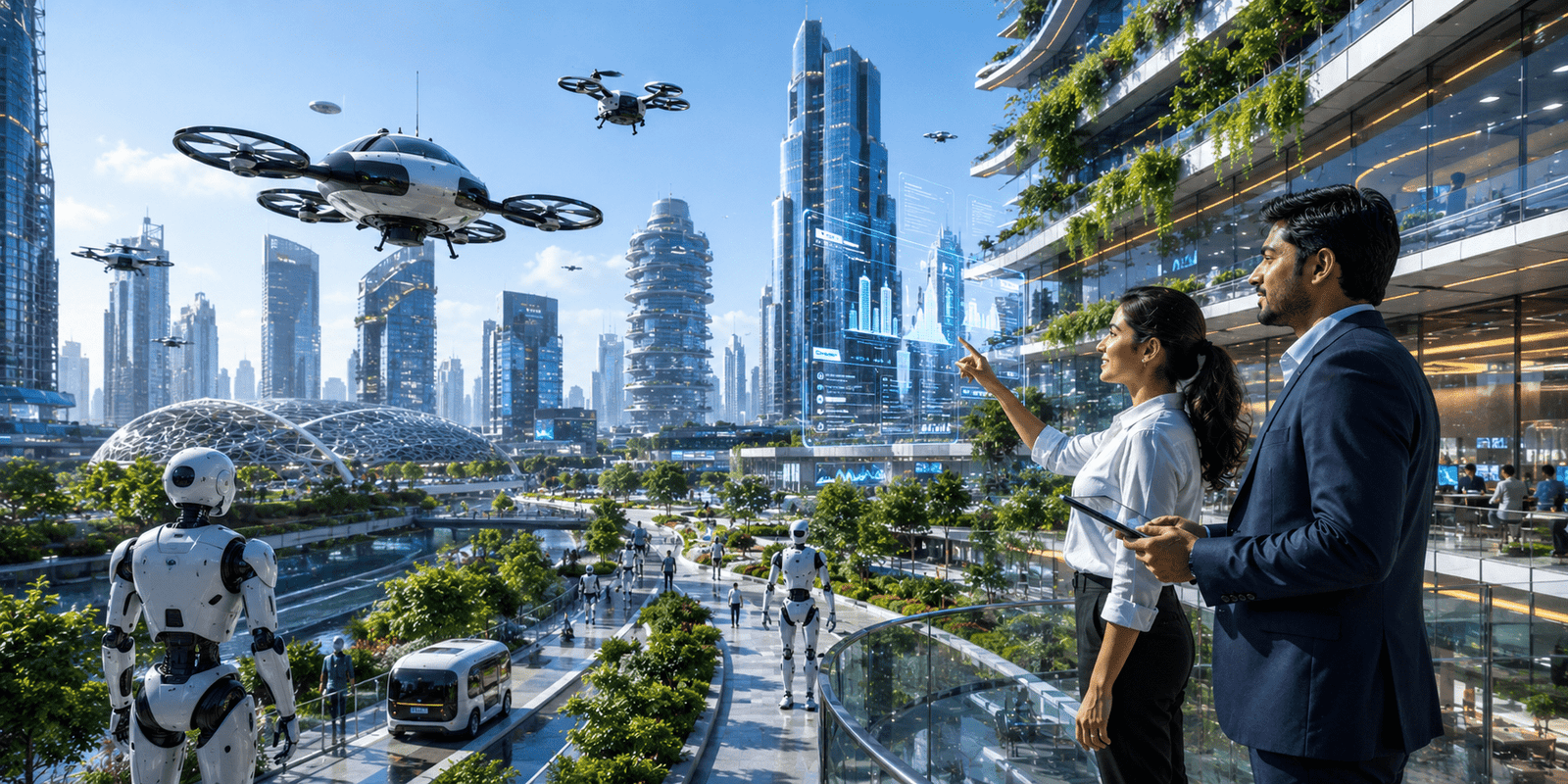
Future AI is no longer a concept limited to science fiction. It is becoming a reality that is transforming industries, businesses, and everyday life. From intelligent virtual assistants to advanced healthcare systems, artificial intelligence is helping organizations solve problems faster and more efficiently than ever before.
As technology continues to evolve, AI is expected to become smarter, more accessible, and deeply integrated into daily activities. Businesses are investing heavily in AI-driven solutions to improve productivity, reduce costs, and create better customer experiences. Understanding how future AI innovations will shape the digital world can help individuals and organizations stay prepared for the opportunities ahead.
Understanding Future AI
Future AI refers to the next generation of artificial intelligence systems that can learn, adapt, reason, and make decisions with greater accuracy than today’s technologies. Unlike traditional software that follows fixed instructions, advanced AI systems continuously improve through data analysis and machine learning.
The future of artificial intelligence is expected to include smarter automation, improved human-machine collaboration, and highly personalized digital experiences. These advancements will allow organizations to solve complex challenges while delivering faster and more efficient services.
Businesses across the globe are already using AI for customer support, predictive analytics, fraud detection, and content generation. However, future AI technologies will take these capabilities to an entirely new level.

Why Future AI Is Important
Artificial intelligence is becoming one of the most valuable technologies of the digital age. Organizations generate enormous amounts of data every day, and AI helps convert that information into meaningful insights.
Future AI systems will improve decision-making by analyzing data faster and more accurately than humans. As a result, businesses will be able to identify opportunities, predict market trends, and optimize operations more effectively.
Moreover, AI can automate repetitive tasks, allowing employees to focus on strategic and creative responsibilities. This balance between automation and human expertise will play a critical role in future business success.
Future AI in Everyday Life
Many people already interact with AI through smartphones, recommendation systems, and voice assistants. In the coming years, these technologies will become even more intelligent and personalized.
Smart homes will automatically adjust lighting, temperature, and security settings based on user preferences. Virtual assistants will better understand human language and provide more accurate support. Personalized healthcare solutions may also monitor health conditions and recommend preventive actions before problems arise.
Transportation is another area where AI will create significant changes. Autonomous vehicles, intelligent traffic management systems, and predictive maintenance technologies are expected to improve safety and efficiency on roads worldwide.

Future AI Across Major Industries
Healthcare
Healthcare is one of the industries expected to benefit most from AI innovation. Advanced diagnostic systems can analyze medical images, detect diseases earlier, and assist doctors in making accurate treatment decisions.
AI-powered predictive analytics may help healthcare providers identify health risks before symptoms appear, improving patient outcomes and reducing treatment costs.
Education
Educational institutions are increasingly adopting AI-driven learning platforms. These systems can personalize lessons according to individual learning styles and performance levels.
Future AI tools may provide real-time feedback, automate administrative tasks, and improve access to quality education for students worldwide.
Finance
Financial institutions use AI to detect fraud, assess risk, and improve customer service. Future innovations will further strengthen cybersecurity and enhance financial decision-making through predictive analytics.
Manufacturing
Manufacturing companies are leveraging AI to optimize production processes, improve quality control, and reduce equipment downtime. Smart factories powered by AI can increase efficiency while lowering operational costs.

Technologies Driving Future AI Growth
Several technologies are accelerating the development of future AI solutions.
| Technology | Role in Future AI |
|---|---|
| Machine Learning | Enables systems to learn from data and improve performance |
| Deep Learning | Supports advanced pattern recognition and decision-making |
| Natural Language Processing | Helps machines understand human language |
| Computer Vision | Allows AI to interpret images and videos |
| Robotics | Combines AI with physical automation |
| Edge Computing | Processes data closer to devices for faster results |
These technologies work together to create more intelligent and efficient systems capable of solving increasingly complex challenges.
Benefits of Future AI
The growing adoption of artificial intelligence offers numerous advantages for businesses and individuals.
Some key benefits include:
- Increased productivity and efficiency
- Faster decision-making
- Improved customer experiences
- Better data analysis capabilities
- Reduced operational costs
- Enhanced innovation opportunities
- Stronger cybersecurity solutions
- More personalized services
As AI continues to evolve, organizations that embrace these technologies will be better positioned to compete in a rapidly changing marketplace.

Challenges and Ethical Concerns
Despite its advantages, future AI also presents several challenges. Data privacy, security risks, algorithmic bias, and workforce disruption remain important concerns.
Organizations must ensure that AI systems are transparent, fair, and accountable. Governments and industry leaders are developing regulations to promote responsible AI development while protecting users and society.
Another challenge involves workforce adaptation. While AI will automate certain tasks, it will also create new job opportunities requiring advanced digital skills. Continuous learning and professional development will therefore become increasingly important.
Preparing for an AI-Powered Future
Businesses and individuals can take several steps to prepare for the future of artificial intelligence.
Organizations should invest in digital transformation initiatives, employee training programs, and AI literacy. Building a workforce that understands emerging technologies will be essential for long-term success.
Individuals can benefit by developing skills such as data analysis, critical thinking, problem-solving, and technology management. These capabilities will remain valuable even as automation becomes more widespread.
Companies that adopt AI strategically while maintaining a human-centered approach are likely to gain significant competitive advantages in the years ahead.

Conclusion
Future AI is set to redefine the digital world through smarter automation, advanced analytics, and innovative technologies. From healthcare and education to finance and manufacturing, artificial intelligence is creating opportunities that were once unimaginable.
While challenges such as privacy, ethics, and workforce adaptation must be addressed, the potential benefits of AI are enormous. Organizations and individuals who embrace innovation, develop relevant skills, and adopt responsible AI practices will be best prepared for the next phase of digital transformation.